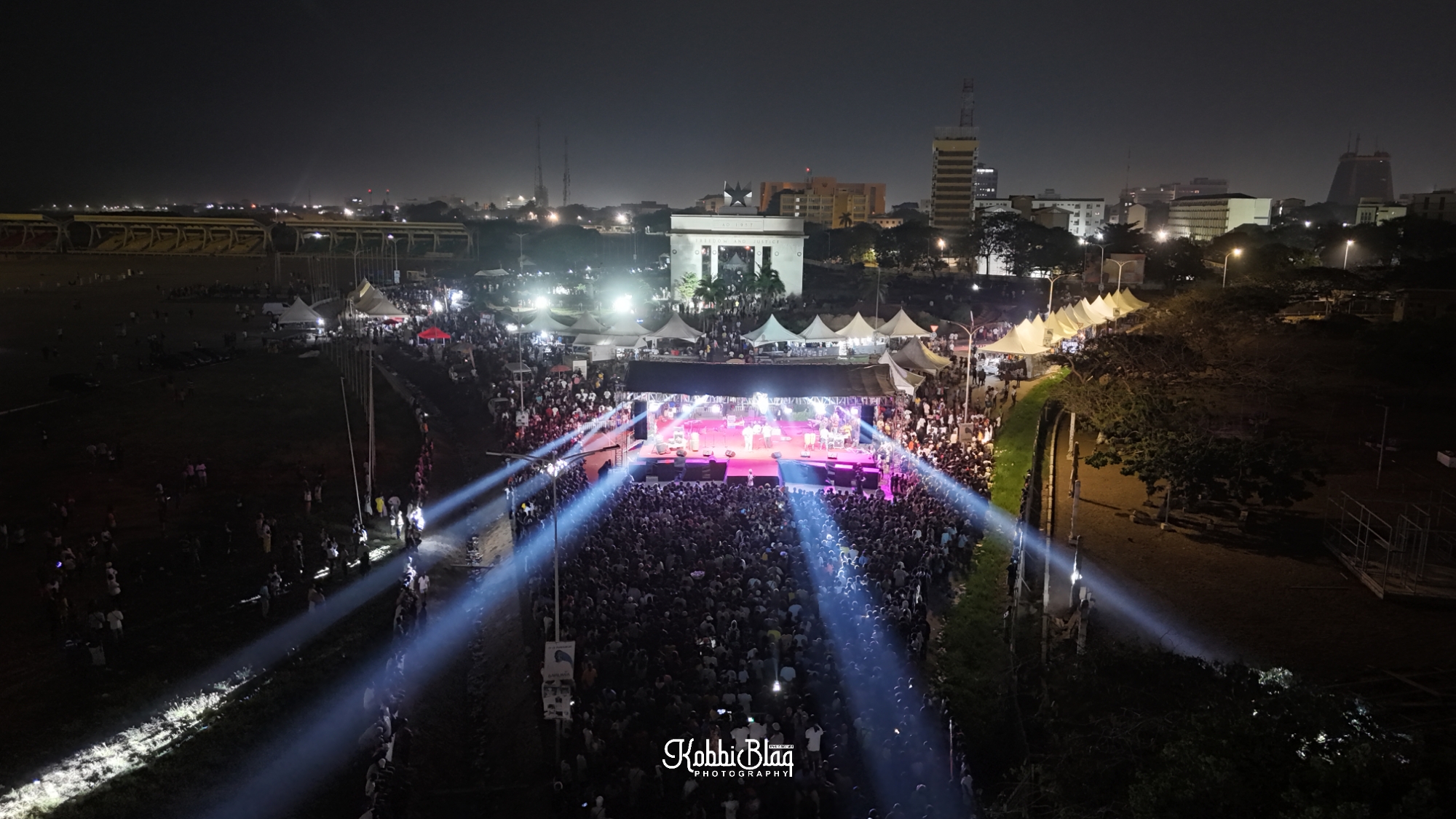
Chalewote Street Art Festival has over the years been known for its street art. Bringing compelling artworks onto the street and making them accessible to a wider audience. However, in recent years, its performance aspect has taken centre stage and has become a key feature of the festival.
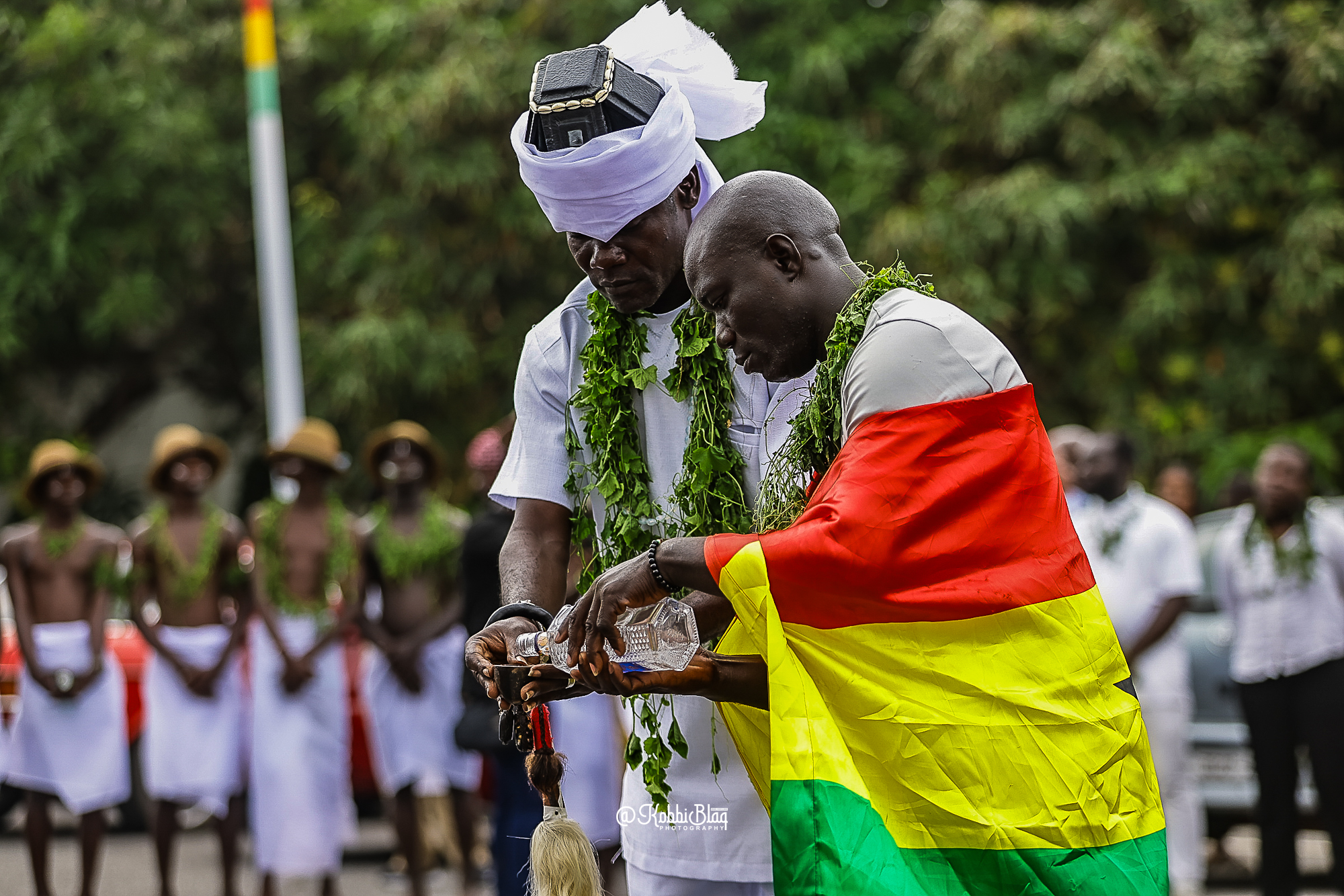
This spotlight on performance offers a unique opportunity to engage with alternative knowledge production and envision future possibilities through live performances and interactive experiences. There have been bold and critical performances that have sewn seeds of curiosity, contemplation, and criticality among audiences who turn up in numbers to witness.
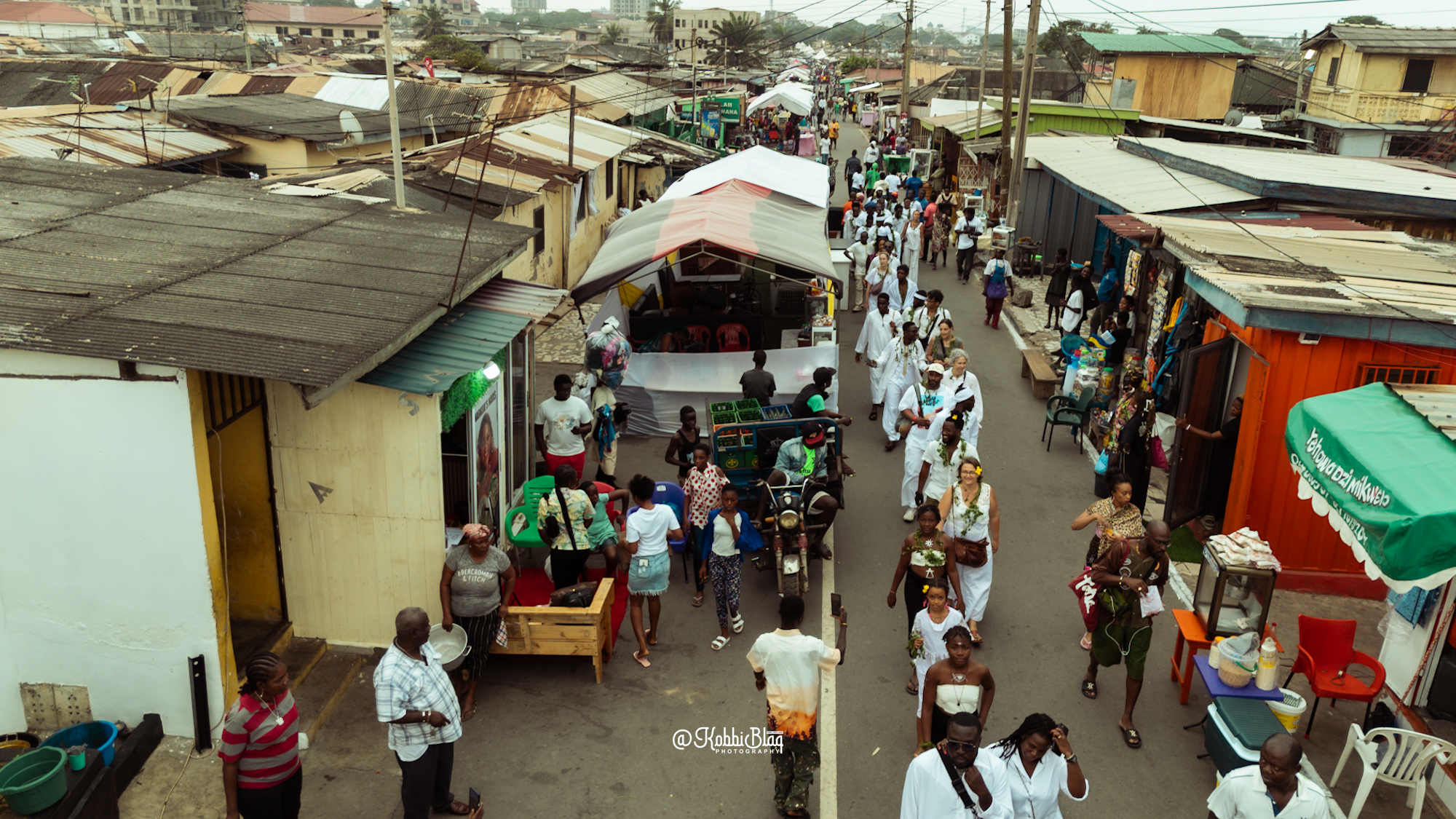
Chalewote curated performances visualise a different spatiotemporal reality and knowledge systems. These performances challenge societal norms and push the boundaries of identity and existence, raising spirited conversations around humanity, climate remediation, politics, and religion.

The 2024 edition of the festival produced some fascinating performances that delivered thought-provoking and exhilarating experiences. Using guerrilla street style and created space performances, the performing artists captivated audiences. The diverse range of themes explored by the artists added depth and complexity to the overall festival experience.
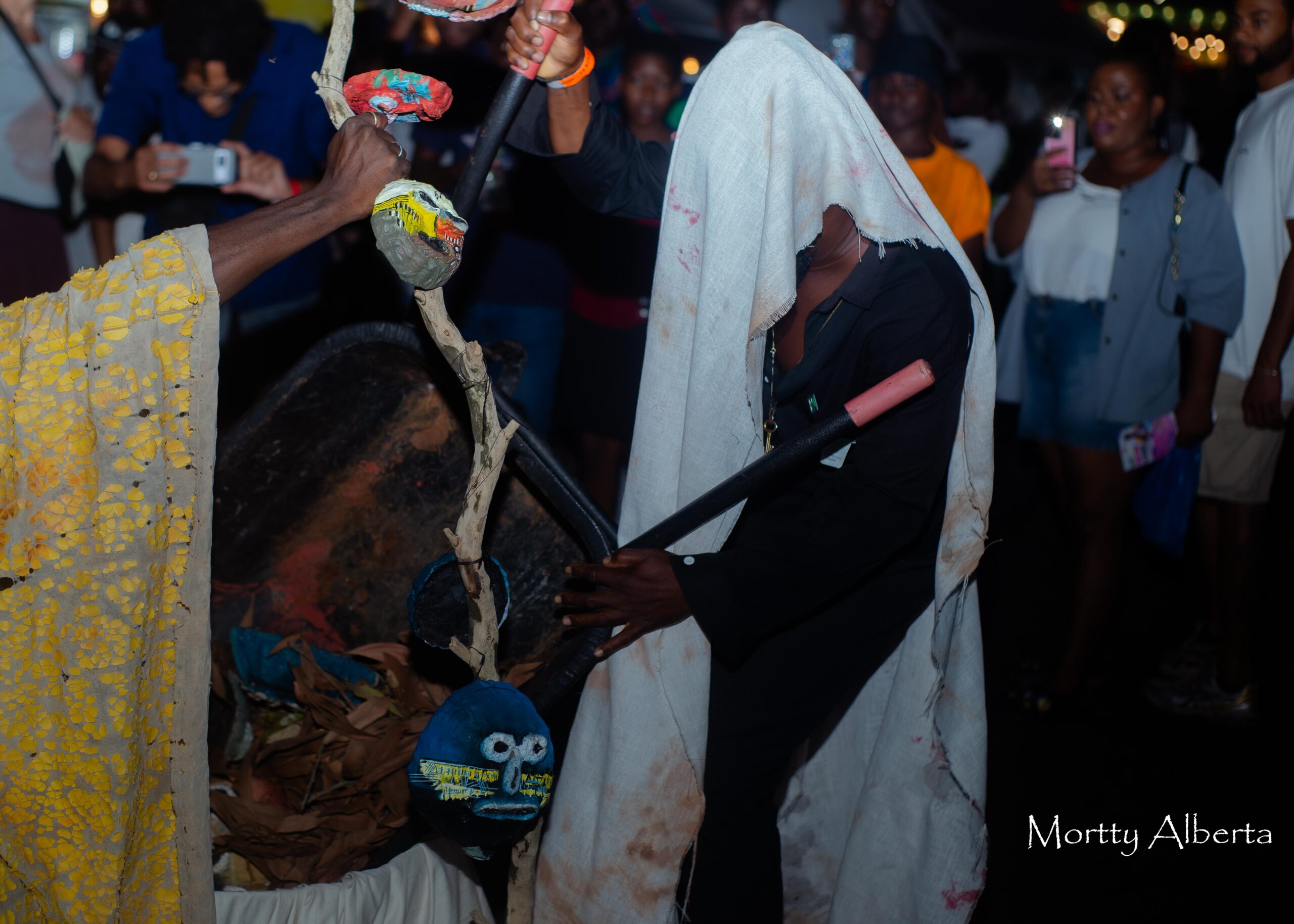
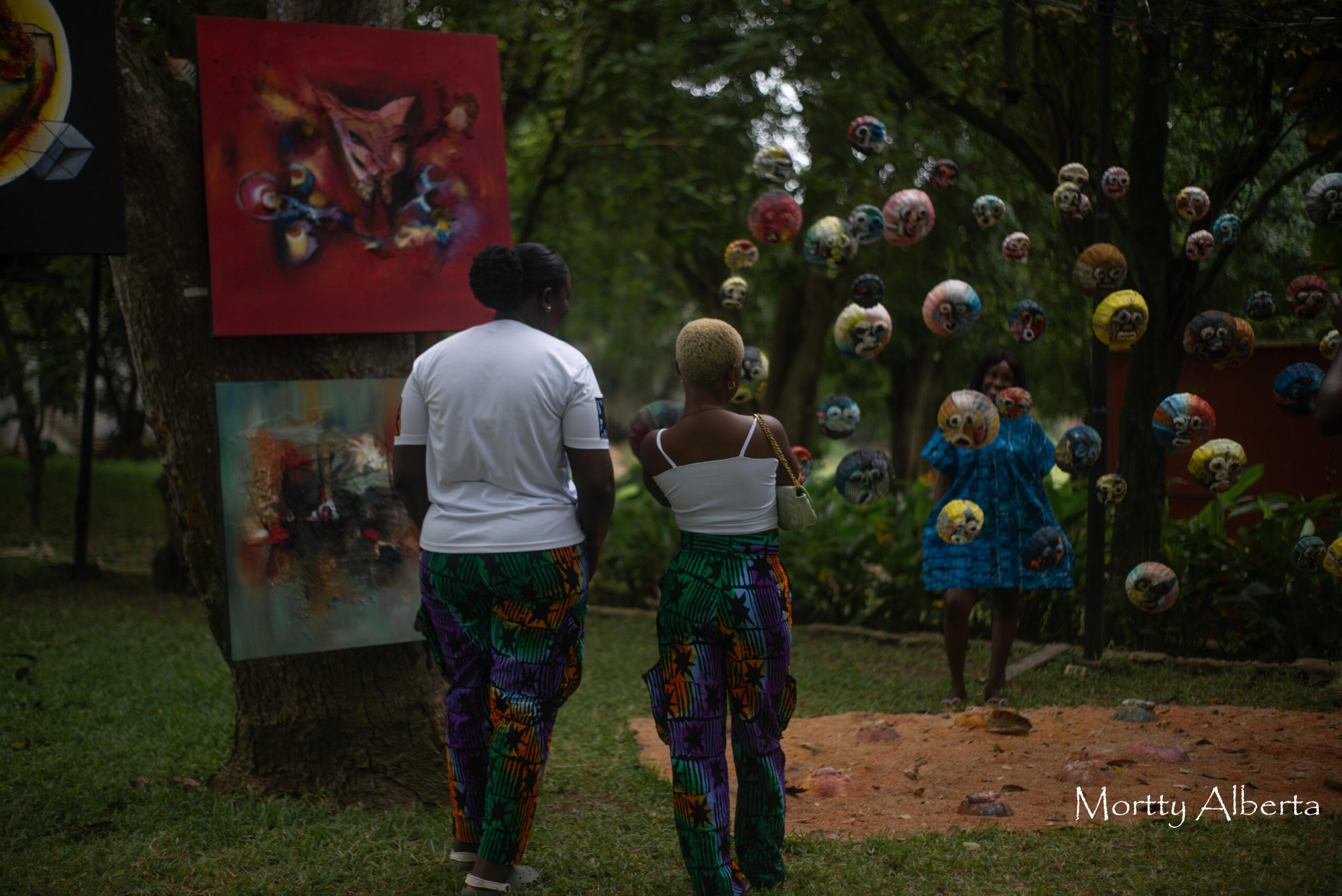
On the street, just before you bend to the alley that held the vendors—the location where the on-street painting of the festival theme: And Now An End to the Empire of Horror took place—Sessi and Nora take up space with their performance, Essence. They are determined to grab the attention of the audience, so they set up just close to the place where people converge before they decide where to go next. The enormous Vanessa Gerotto artwork, “Life on Earth Will Outlast Ever Empire,” stands in front of them. Her painting is superimposed on the street and immediately grabs your attention, resembling any other Accra billboard—religious or commercial. This method of taking up space takes the form of an artistic activism practice or that of a typical Ghanaian street preacher.
The duo’s presence on the street demands to be acknowledged, drawing in curious onlookers and passersby with their energy. Perhaps this is a gesture to Ghanaian artists to be disruptive and take up space on the street instead of waiting for galleries and black boxes to perform.

Their performance talks about the disturbing consequences of humanity’s differences. This duo, from different race is affiliated by family and profession. Their performance challenges societal stereotypes and encourages viewers to reflect on their own prejudices.
Through their art, they attempt to promote understanding among all people, regardless of race or background. They use the four elements (wind, water, fire, and earth) as a node to provoke thoughts on the interconnectedness of all living beings.

While their collaboration may be seen as exciting, one cannot avoid to probe into the historical context that they both share.
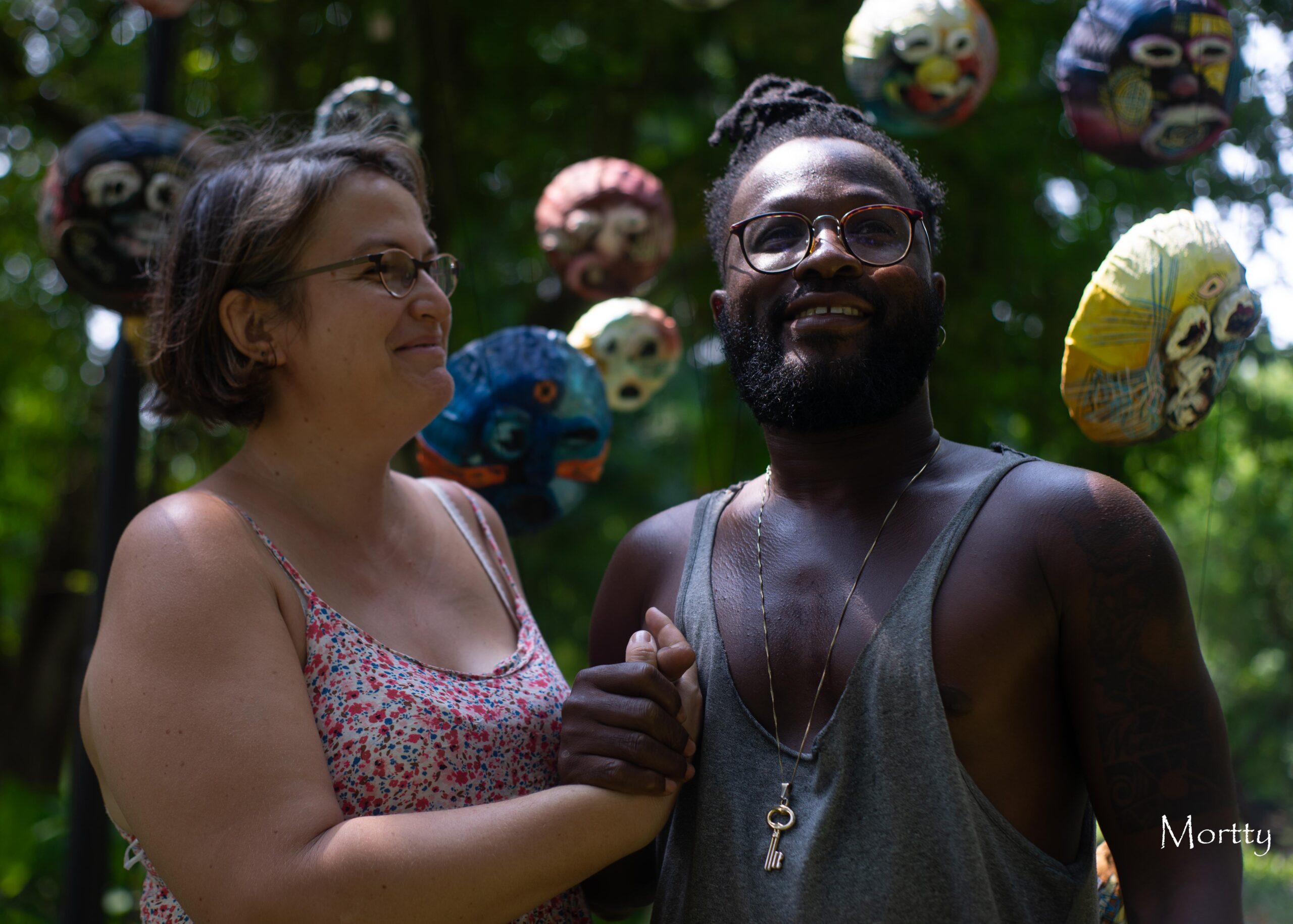
Nora is French, and Sessi is from Benin; their backgrounds recuperate complex histories and cultural exchanges that inform their work. Despite these complexities, their work serves as a reminder of the need for mutual respect in a diverse world.
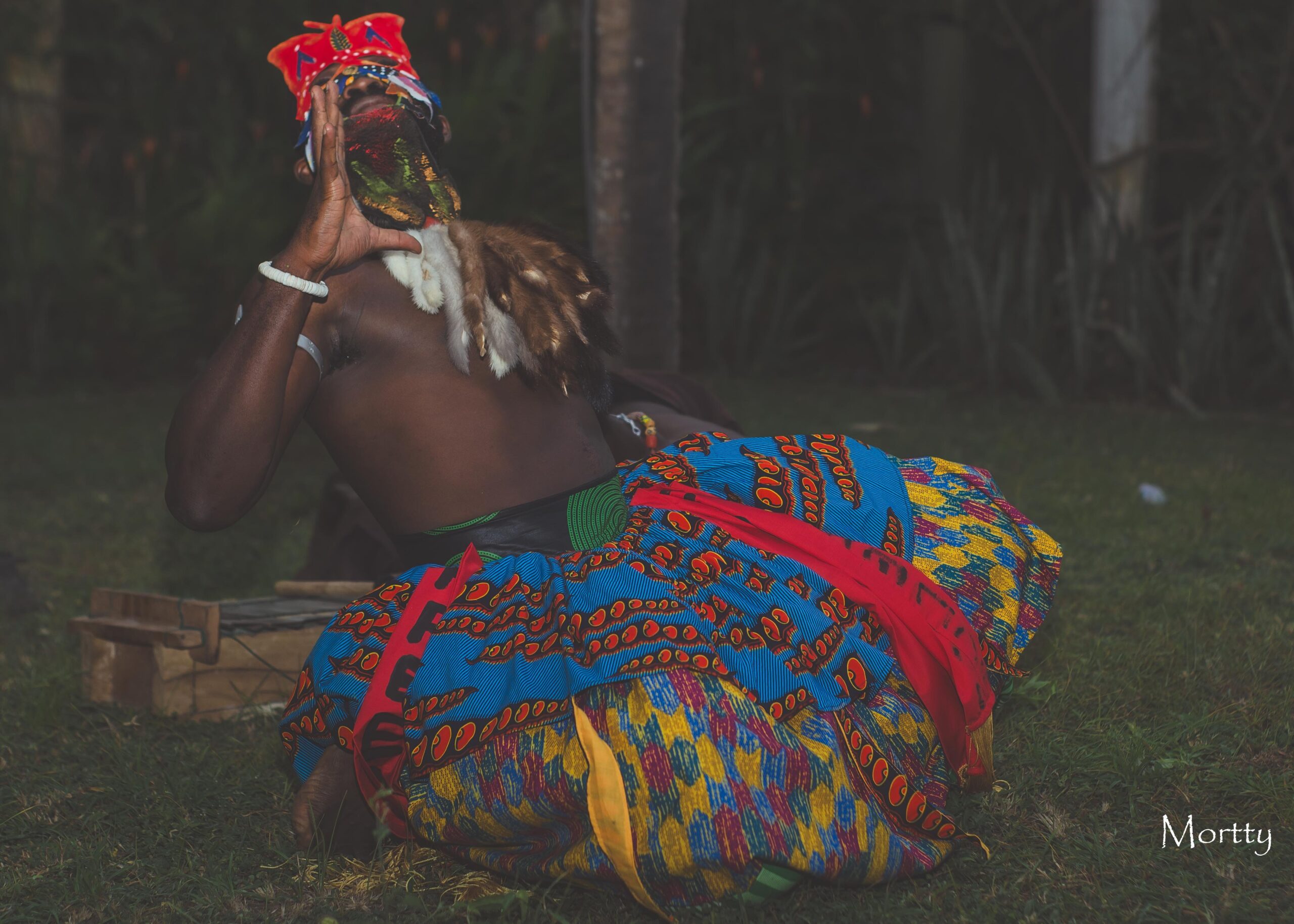
Foli Creppy, on the other hand, uses his body and that of his collaborators as transistors to conjure an auspicious presence, one that eerily terrifies some of the audience. His performance takes place inside the Osu Christianborg Castle Gardens, a place that has historically been a terrifying place. In an unfilled fountain, he conceals the brutalist nature of the fountain’s architecture and gives it layered significance with raffia mats.
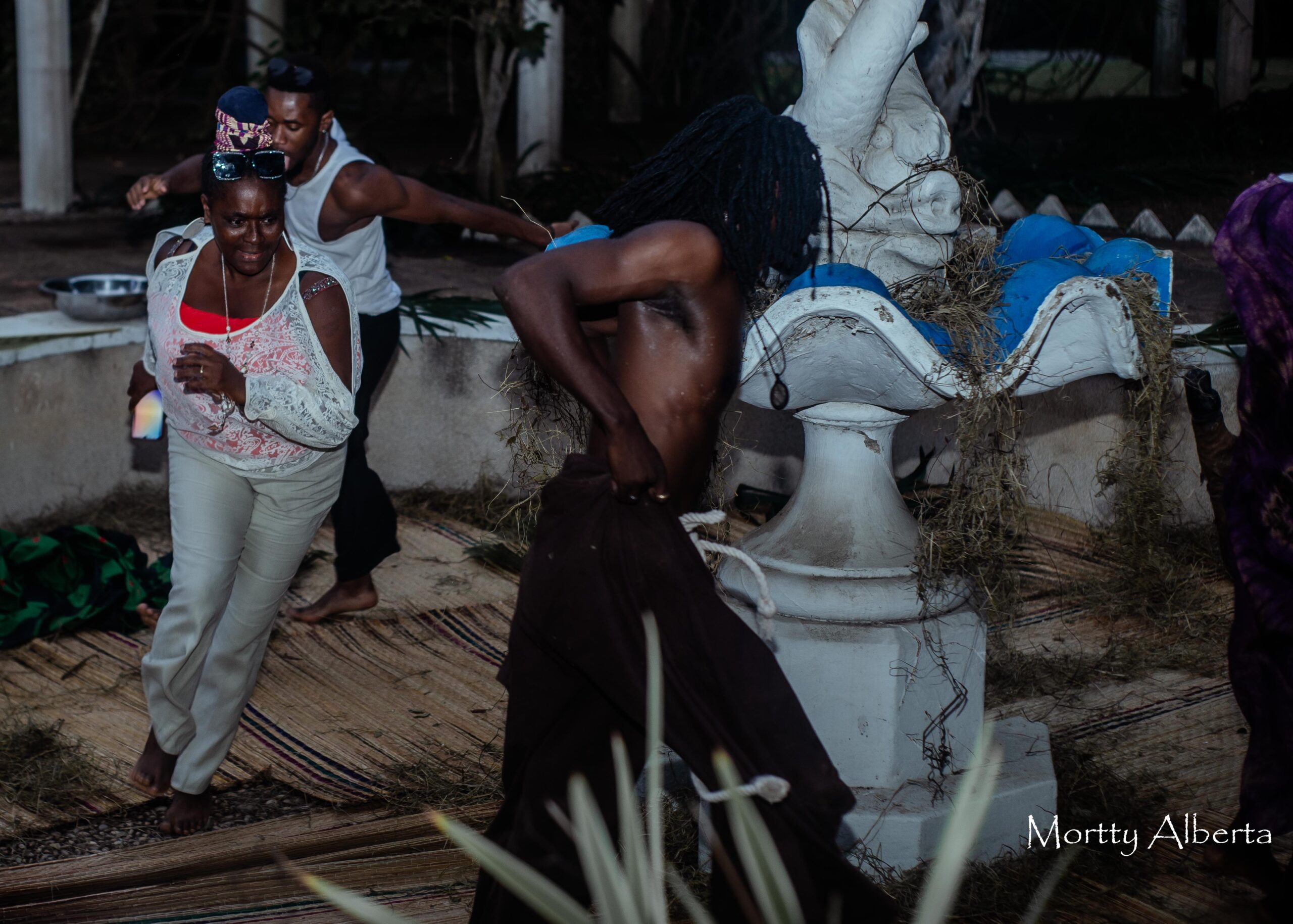
For him, the mats remind him of his grandmother, connect him to his roots, and ground him. Just a few miles away from the performance venue is Foli’s ancestral home in Benin, which is close to his heart even though he resides in Berlin. This same location was once used as a human harvester, hauling people across the Atlantic as slaves. Perhaps this performance is a nostalgic gesture towards his homeland, but it is also burdened with the weight of history.
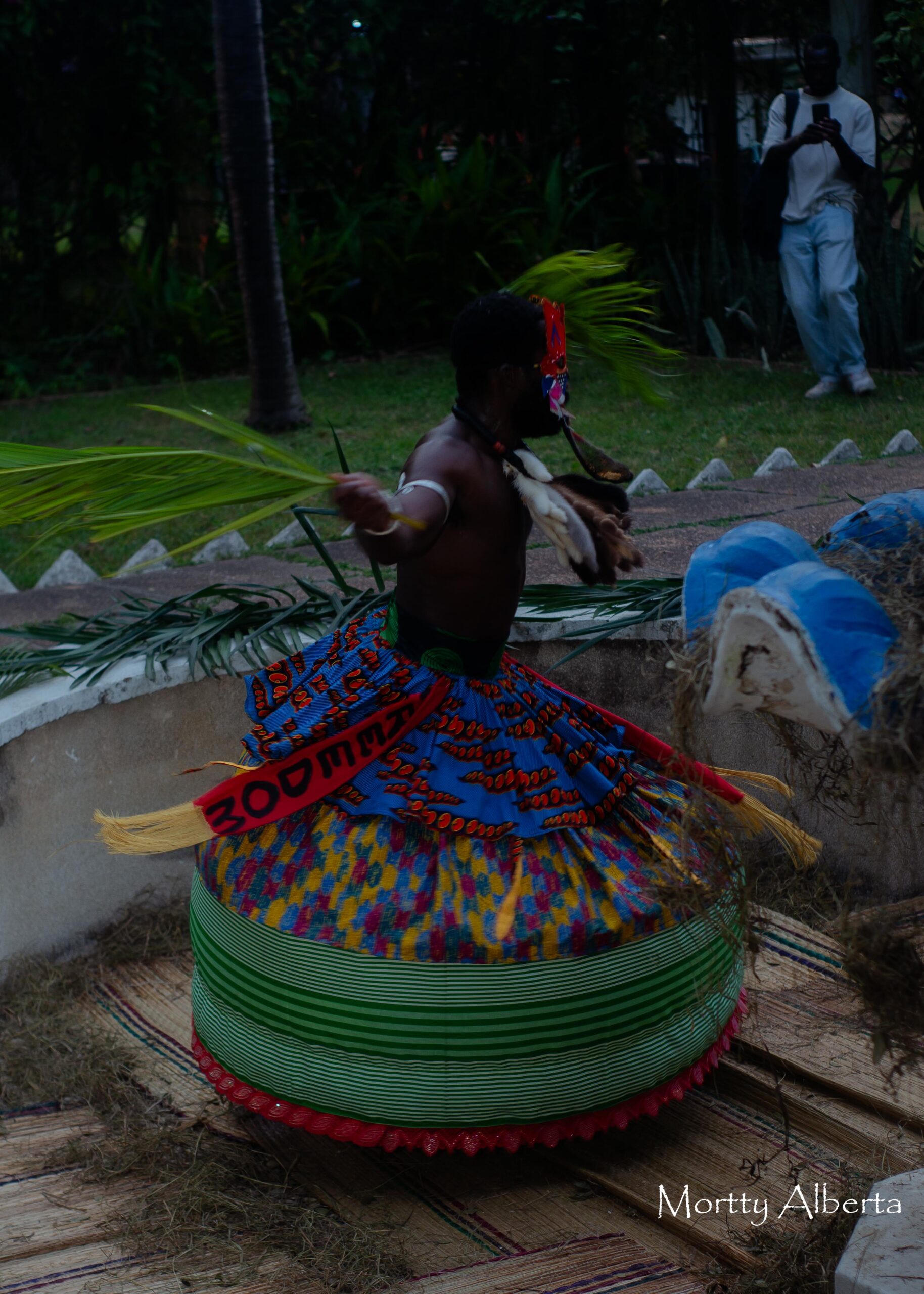
In the performance, his body contorts in different shapes and movements at the sound of the drum and xylophone. Foli Creppy’s movements are a physical manifestation of his connection to his African spiritual heritage and the natural world. At a point, his movements becomes serpentine and he spins around like a possessed dancer, embodying the raw and natural energy of his ancestral spirituality. In keeping with the traditional dances of the Fon, he is dressed in a long, multicoloured skirt and a mask, a motif that brings deceased ancestors to life. His torso on the other hand is bare. As he moves across from various realms and spaces, you witness his body drenched in sweat and his breathing becoming more laboured, as if he is channelling the spirits of his ancestors.

Just adjacent to him is another performer, Nana Yaw Ananse, who lays on the floor in his brown long skirt and bare chested. His body quavers, and he rises on his knees, making different movements with his hands and feet. Ananse’s movements are deliberate and calculated, contrasting with the raw energy of Foli Creppy. Together they create a Pan African collaboration that honours their spiritual traditions and African heritage. Their bodies immediately become a window to see through time and offer guidance into alternative spaces of joy and liberation. They create an ancestor connection that transcends topography and linear time, transferring happiness and memories.
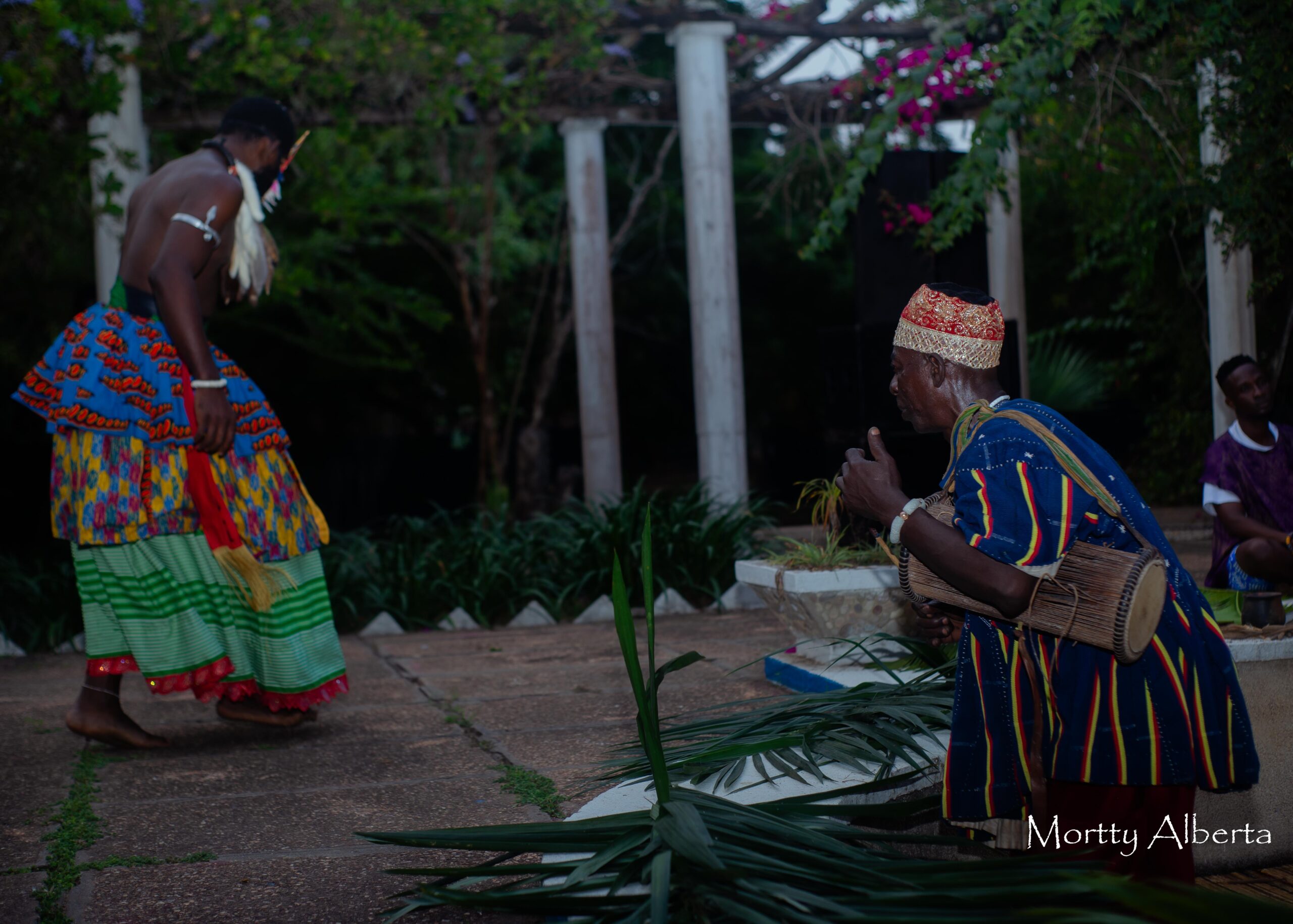
What makes their performance intriguing is the drum that directs their movements. Nii Adjarh, Osu Obunufoatse, guides them with the beats and vibrations of the drum into spaces where movement and rhythm blend seamlessly. The drumming, with its pulsating reverberations, brings us into proximity with the physical and the immaterial world. The fusion of traditional drumming, xylophone, smoke, DJ’s set, movements, and dance produces a multisensory knowledge-making and ambience.

The audience is invited to participate in the performance by adding their dance moves and energy, creating a shared experience that transcends individuality and connects everyone inside the fountain.
Here, the fountain becomes a safe space and everyone is invited to dance without prejudice. When Foli begins his live DJ set, it turns the performance into a collective rave. The infectious energy spreads throughout, creating a sense of liberation that lingers long after the performance ends.
The highlight of the performances resoundingly was the Denyigba Borborbor group.

The Borborbor dance is ancestral knowledge passed down from generations and embodied in its physiological and emotional level. It is intimately embellished with social, political, spiritual, and sensual significance and often experienced in a community.

The rhythm of the drums and the harmonious voices of the singers captivate the audience, inviting them to join in the dance.
The Denyibga Borborbor group truly embodies the richly textured heritage and traditions of their ancestors. Although they are far away from their ancestral homes, the dance, drums, and singing bring them closer to their roots and help them maintain a strong connection to their cultural identity.

Through their performance, they continue to celebrate the unique art form that has been a vital part of their community for generations. This is the same for the audience who joins the performance; they may not necessarily belong to the same cultural background, but they can feel the spirit and energy of the music and dance. This creates a shared experience, bridges gaps between different ethnicity, and fosters a deeper appreciation for diversity.
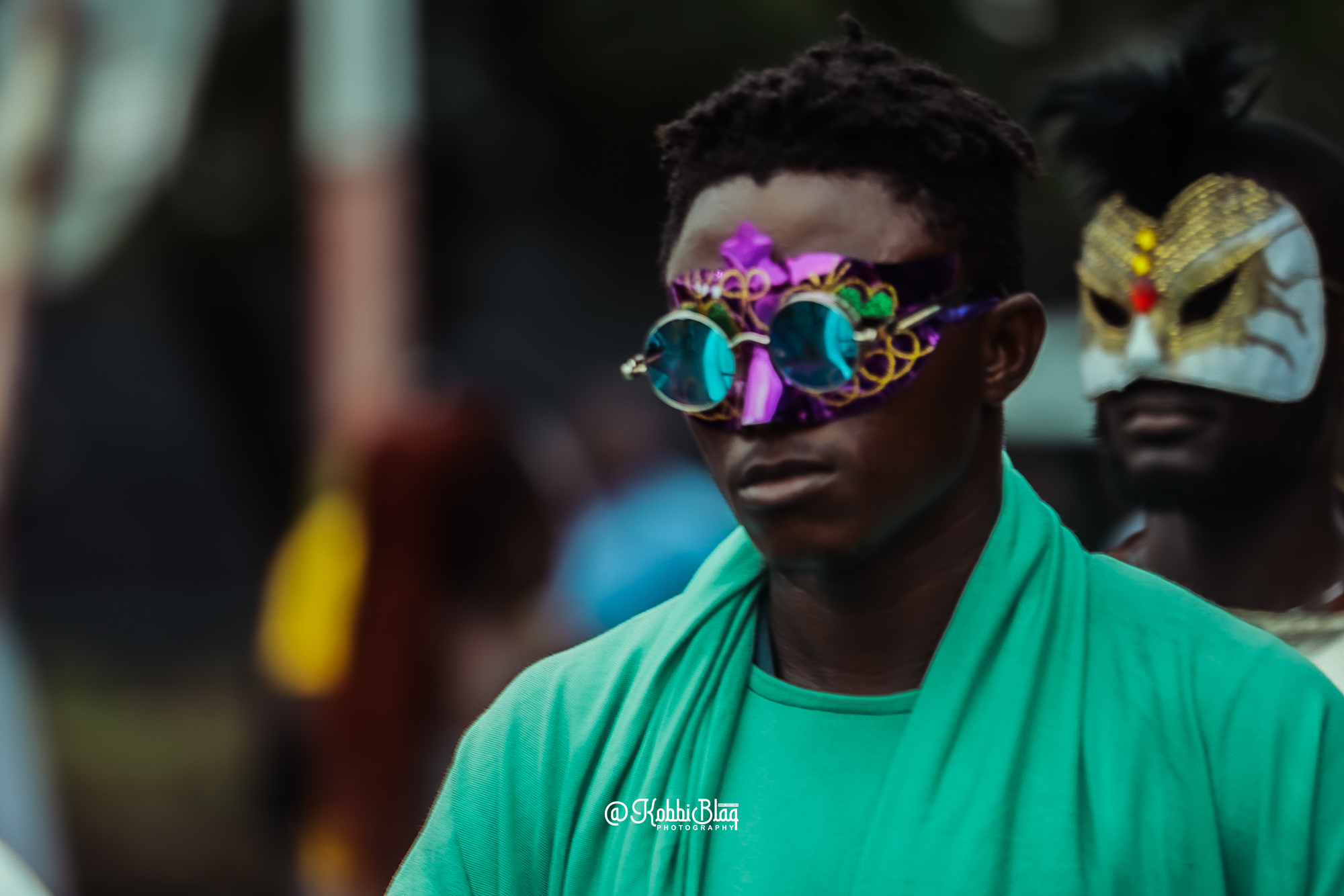
The other performances were the Chalewote processions from the Day of ReMembering and Gbagbasete, the newest festival addition.
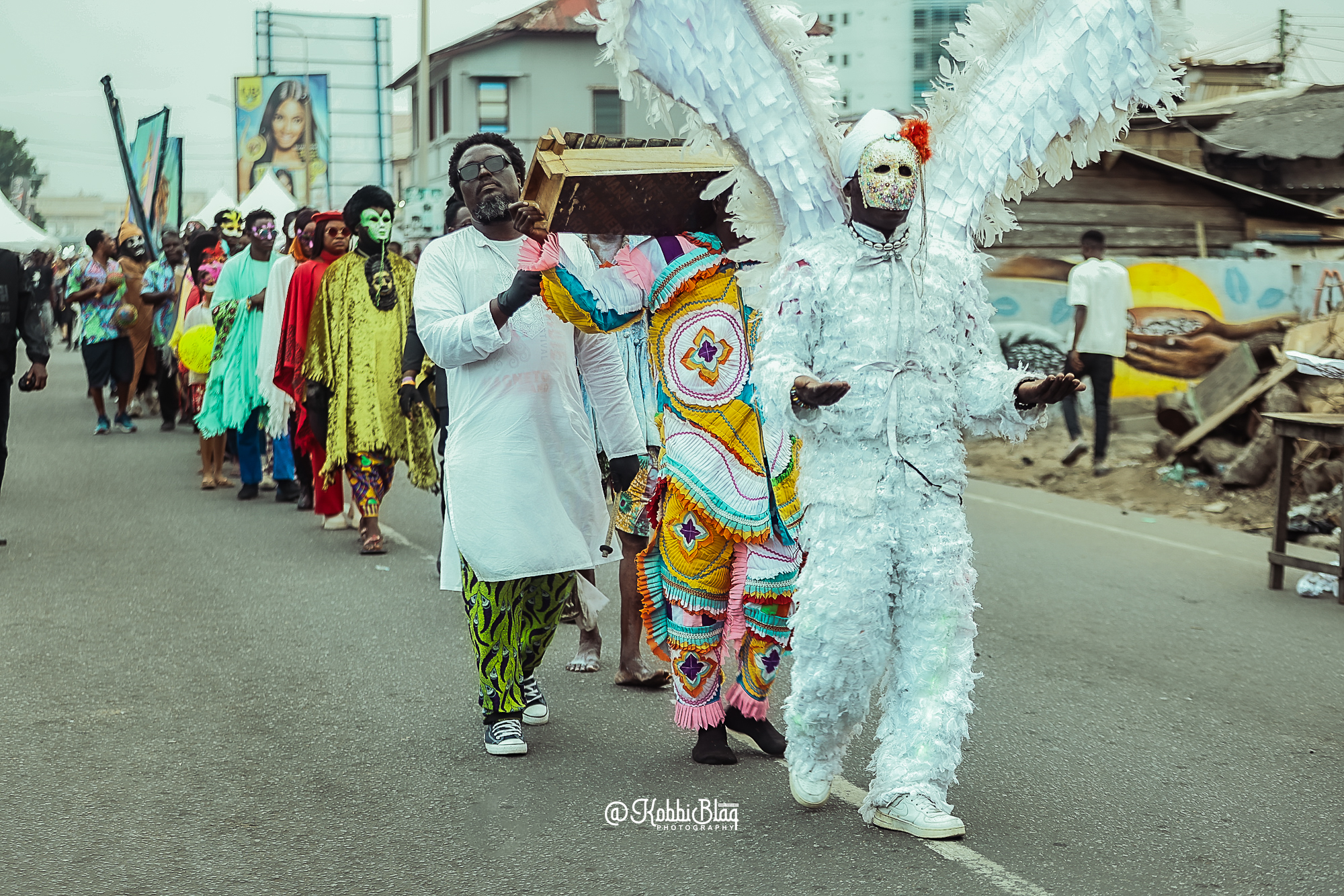
The processions travel different routes connecting different roots, even though they all begin and end at the Osu Castle Garden, signifying the cyclical nature of most Ga ritual processions.
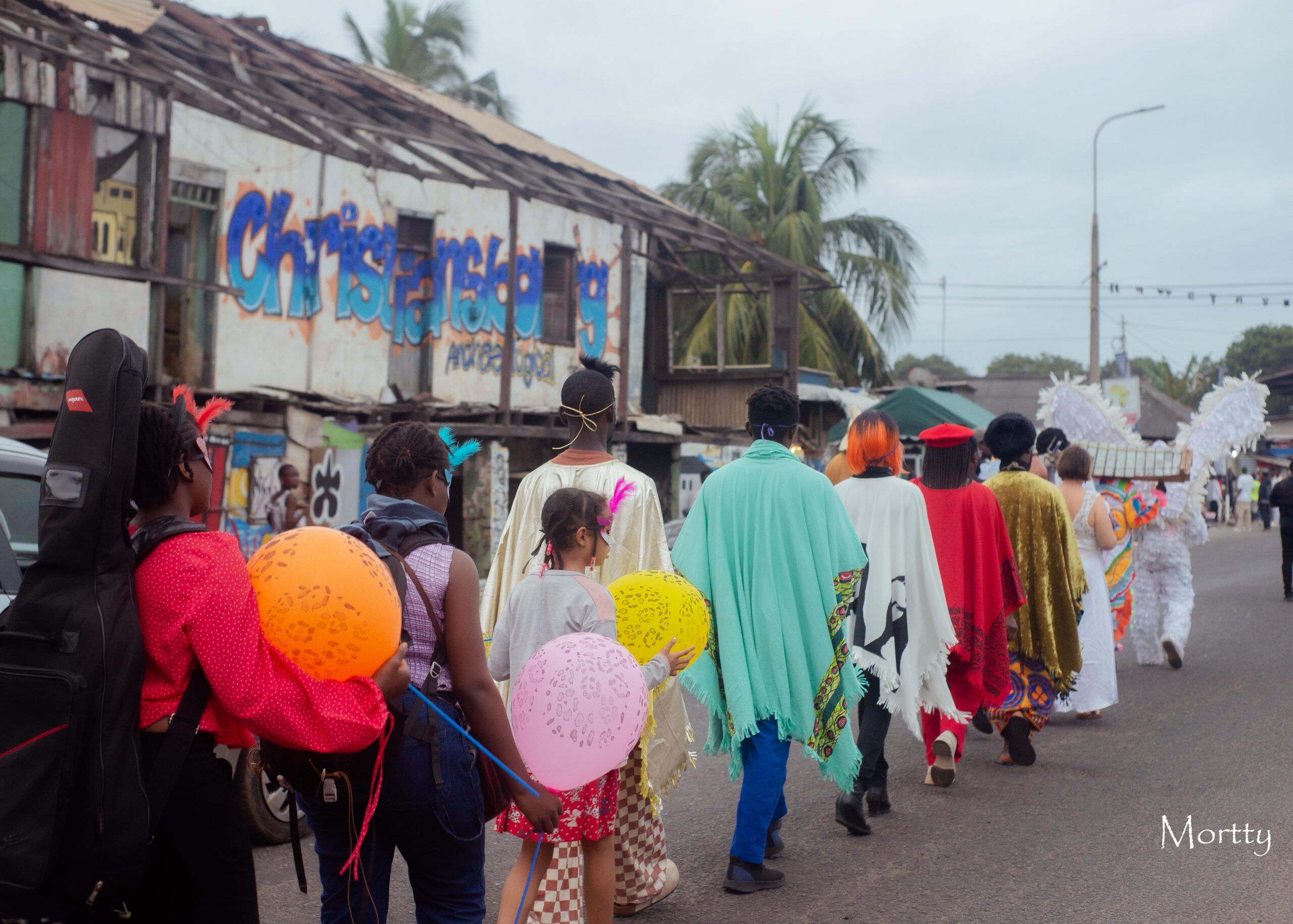
Unlike the Day of ReMembering procession, Gbagbasete is not silent, it is loud both visually and sonically. The participating artists are draped in their bold coloured poncho dress and multicoloured masks. Some of them hold balloons and others wheel along murals with funky colours and evasive creatures.
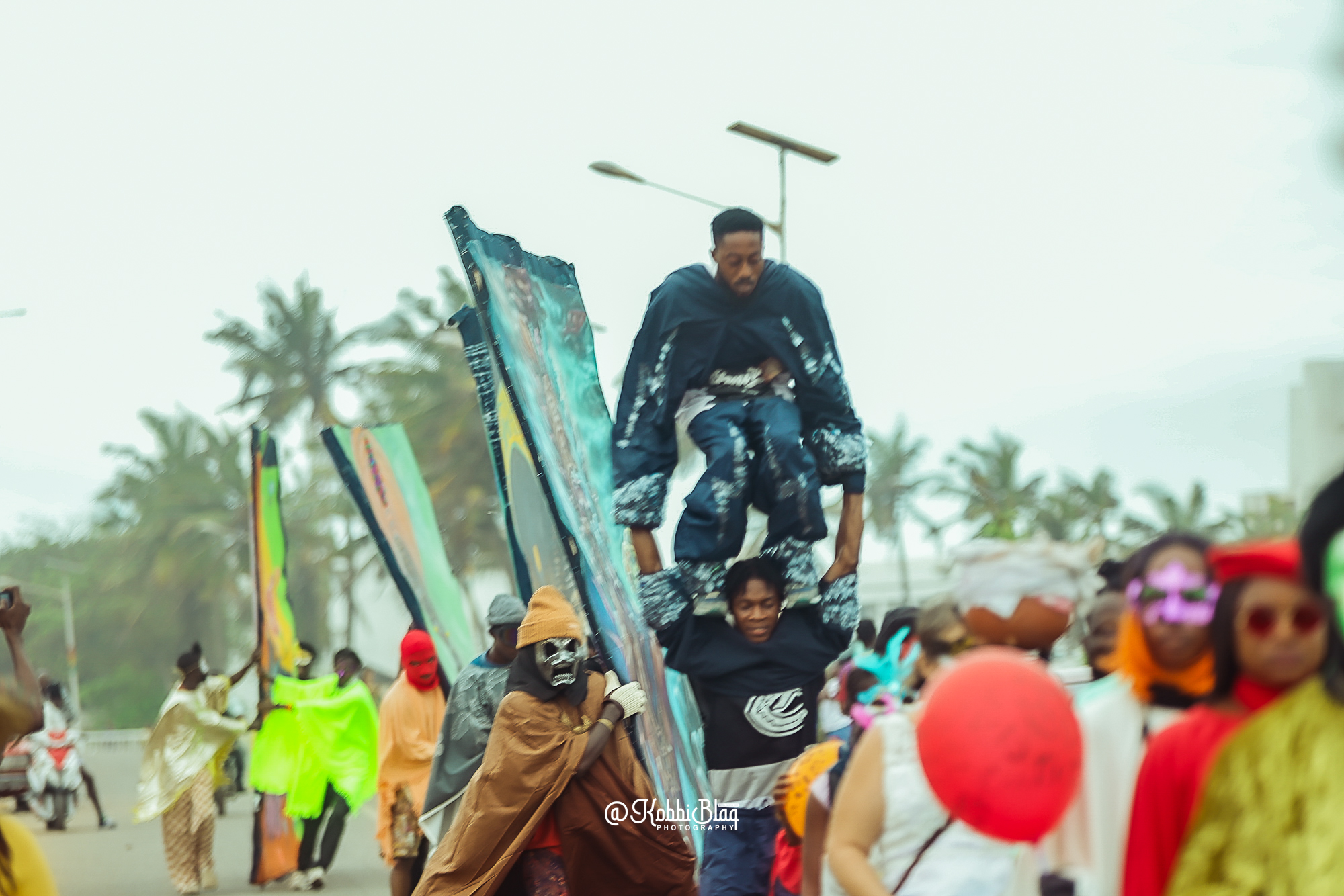
There are stuntmen who appear and disappear somersaulting their way through the procession. At the end of the procession line is a group of drummers who sing and drum along.
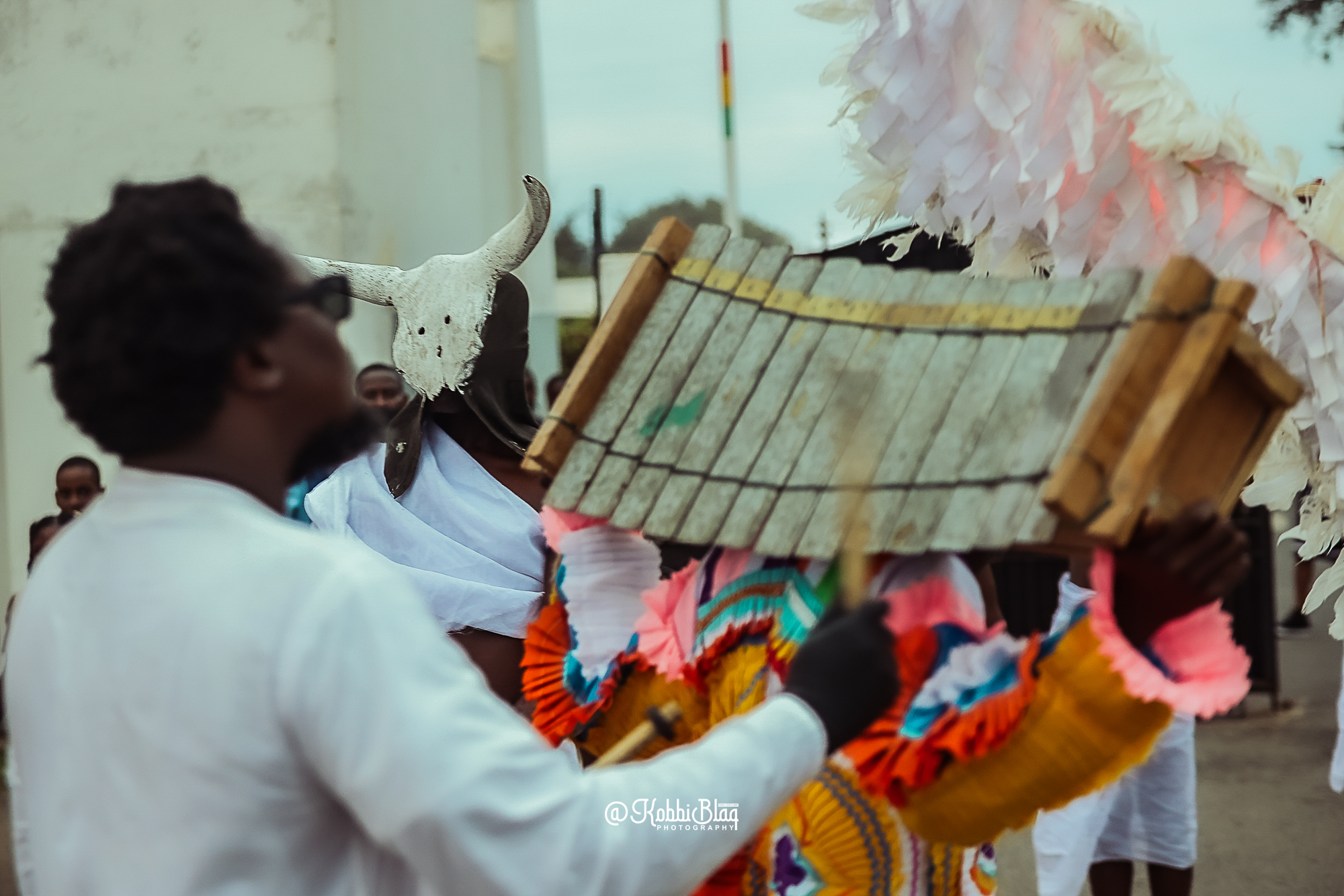
There are also other sounds like whistles, playing of xylophone and conjured sounds made during the procession. This makes Gbagbasete performatively unpredictable just like the sonic imaginings that informs the procession.
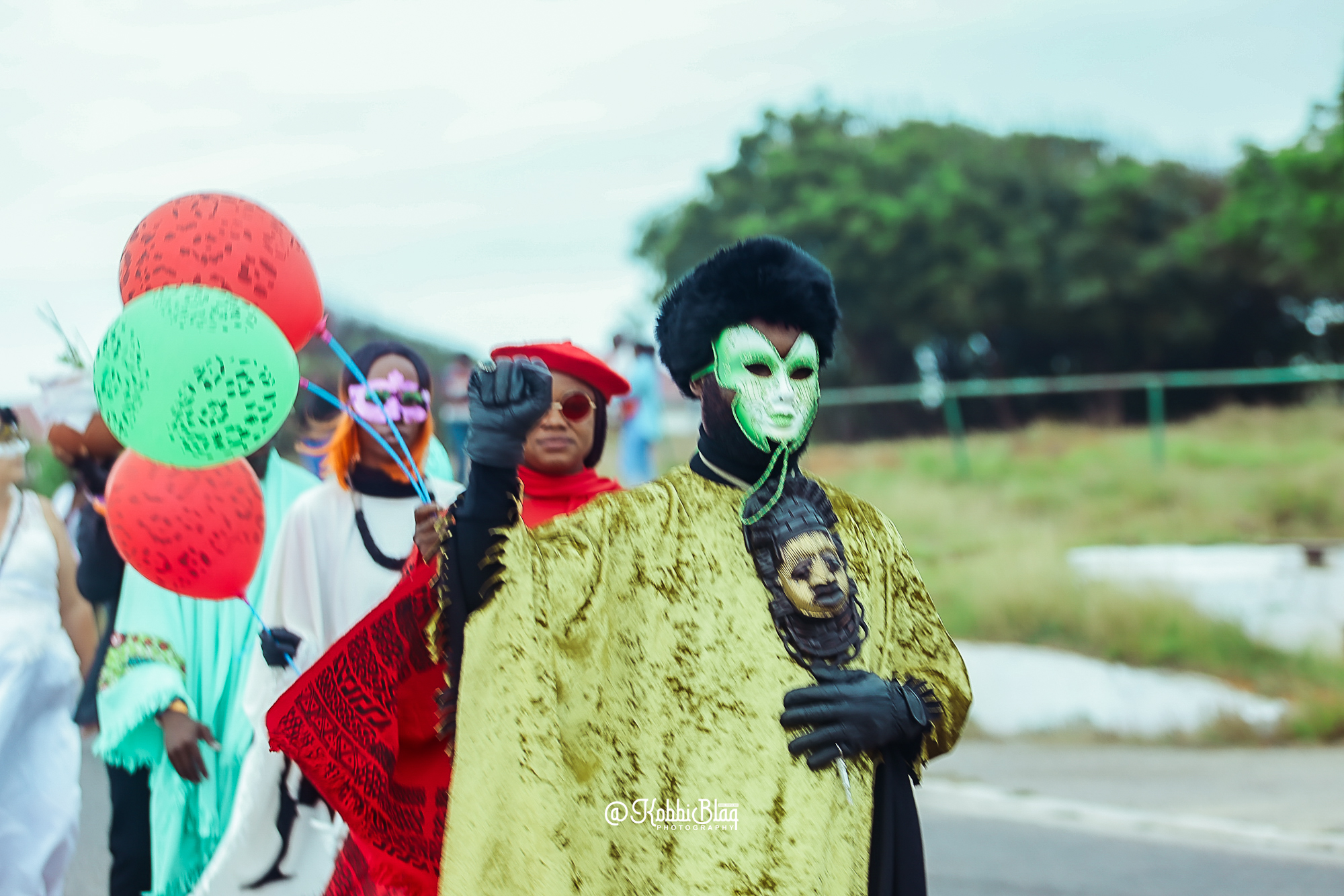
It is a product of curated and serendipitous processes. The vibrant colours, silence, music, moving murals, singing and dance of the various processions create a spectacular festival experience.
Just as Gbabasete enters the Osu Castle Gardens to conclude, Ed Franklin Gavua and the kids under his tutelage take off in a final act that presents a poignant reflection on the cyclical nature of time and the captivating rituals that have sustained feudal societies for centuries. These societies have thrived on the back of unacknowledged labour.
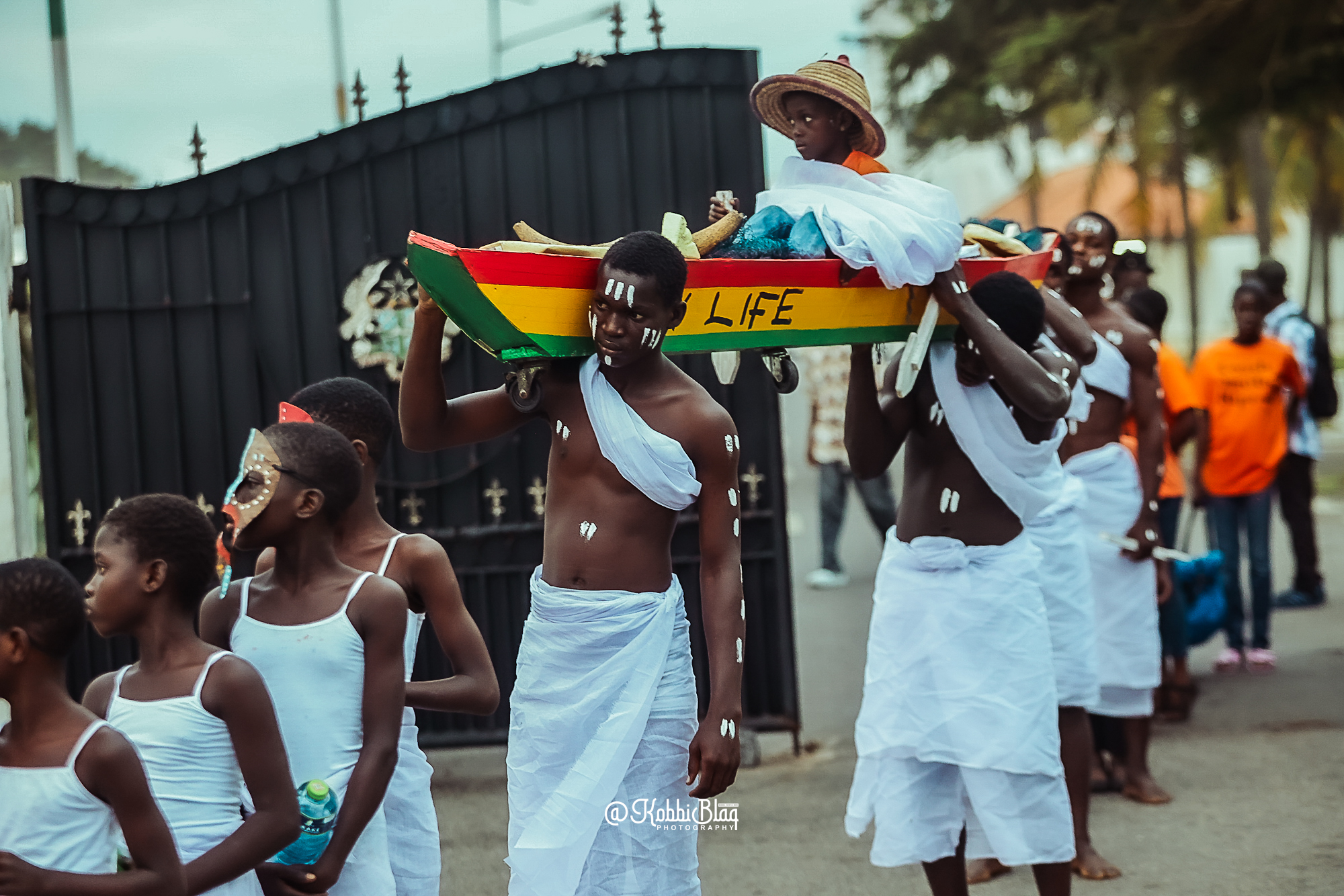
Through the procession, they aim to challenge and disrupt these exploitative traditions, using performance as a means to critique and destabilise the rituals that have upheld these systems.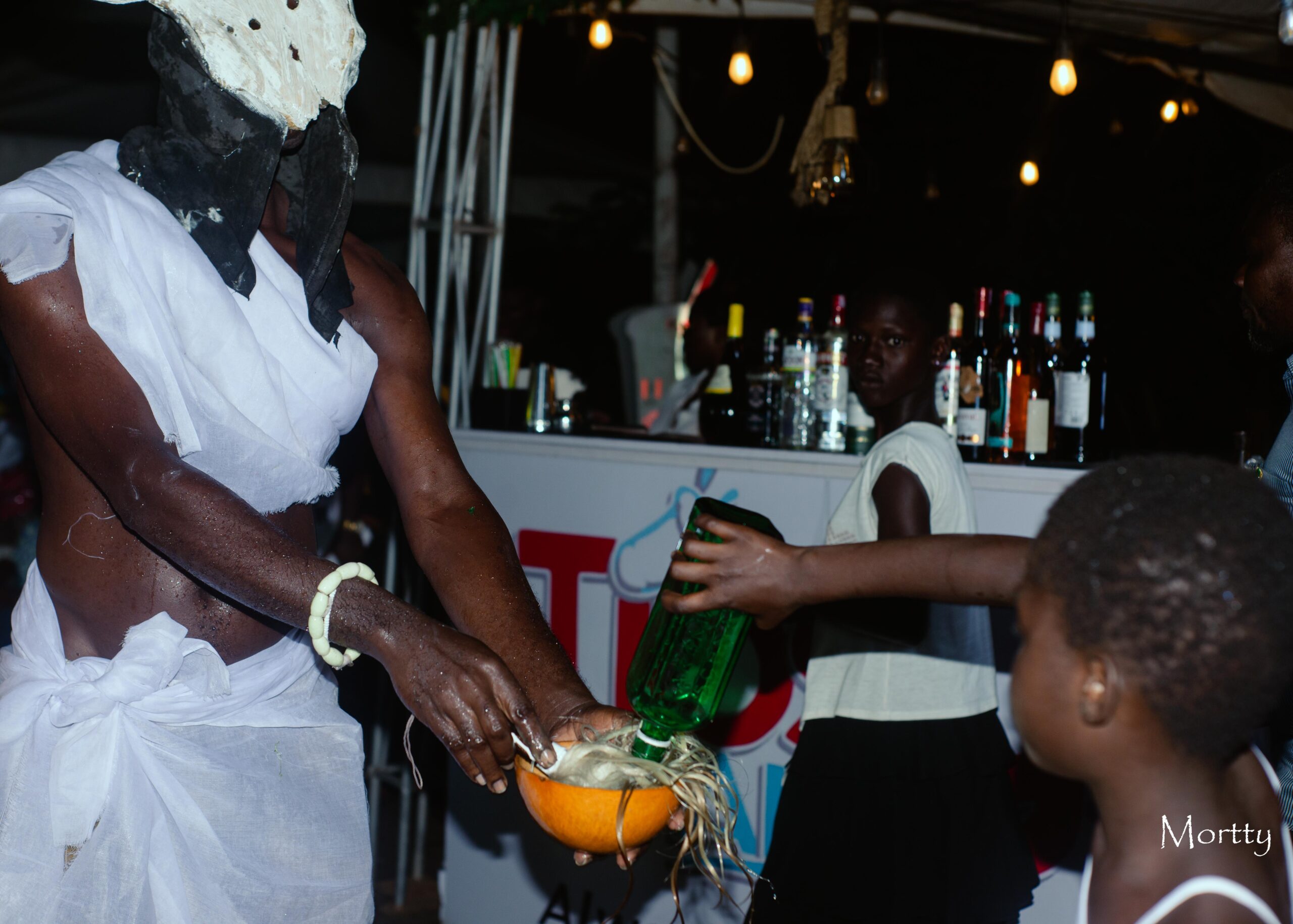
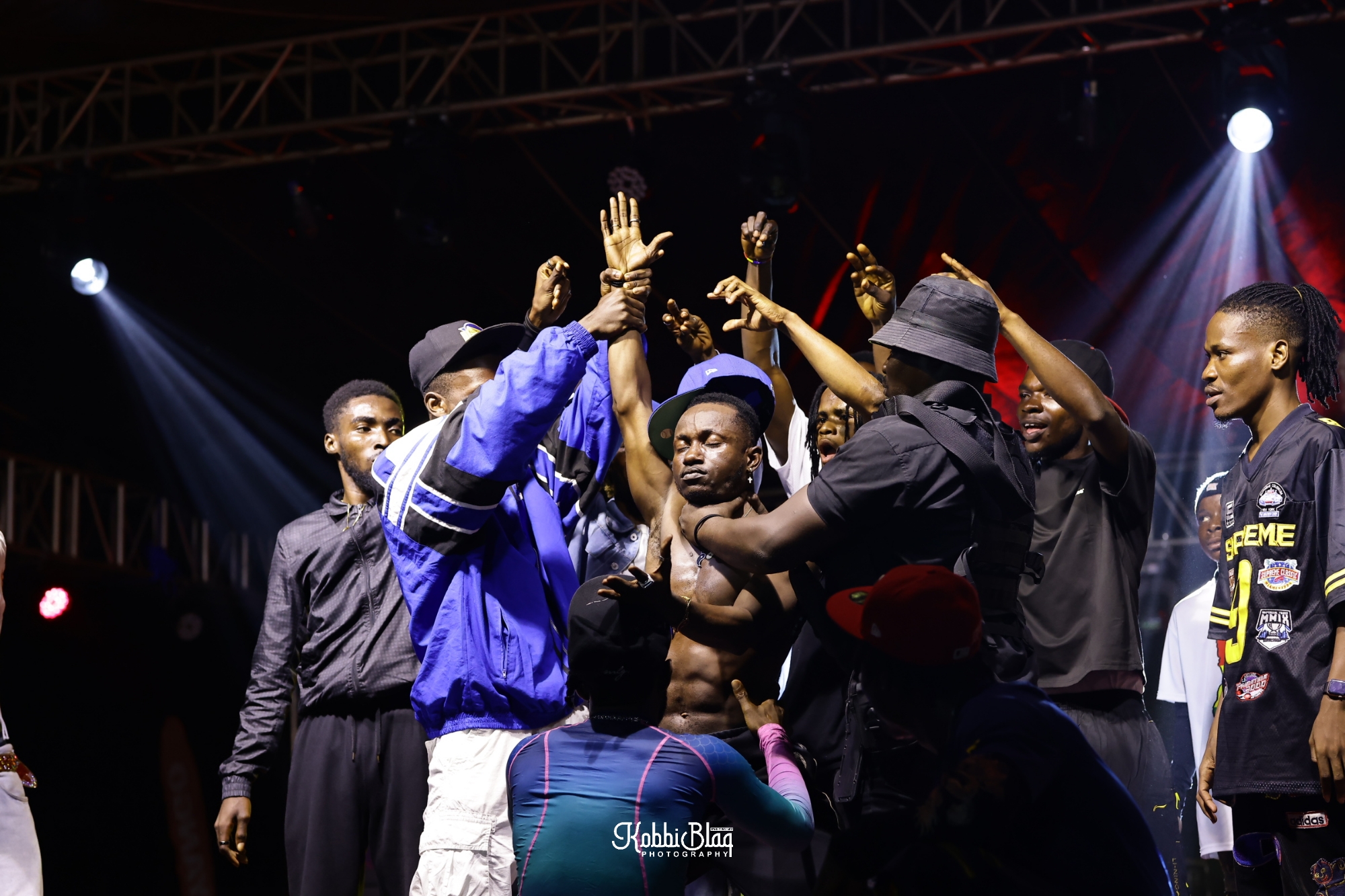
Beyond the processions, the Sabolai Radio Music stage comes alive with several alternative and classic music and dance performances that add to the vibrant festival atmosphere. The dance performers especially move in synchrony to the beat of the music and defy any attempt to discipline their bodies.

They are unruly and uninhibited. Their bodies move with a life of their own, expressing emotions, and stories through each fluid movement.
The two performances that get traction and are picked up by mainstream media are cosplay and street fashion flight. Perhaps it is because of their extraordinary and audacious character.

These uncurated performances occur because the festival lends itself to unpredictability and self-expression beyond prejudice. Chalewote Street Art Festival is a rare opportunity for people to show up and be unconventionally stylish.

For most people, this is the only occasion in which they feel comfortable being unconventional without being tagged as insane or eccentric. Their fantasised self-imagining is given a platform to shine temporarily, free from societal constraints and expectations.

It would not be farfetched to speculate that people would live in this radical dreamscape and create new forms of life away from the prejudiced, exploitative norms of society.

These diverse performances added a layer of complexity to the overall festival experience. They served as a way to connect with ancestral memories, wisdom, traditions, and community while also allowing for self-representation, communal expression, creativity and alternative realities.

The performances served as a time capsule of celebration, healing, community, and ancestral knowledge.They allow us to imagine alternative realities and futurities beyond visual representations. The performances present additional rubric to experience and interact with the festival.