Introduction
Street art is rarely just art. In African contexts especially under the pressures of colonial legacies, neoliberal urbanism, multinational extractivism, and cultural commodification it can be an insurgent act, a visual strike against collective amnesia. Chale Wote Street Art Festival, now a defining fixture in Accra’s cultural calendar, takes this insurgency to the streets of Osu.
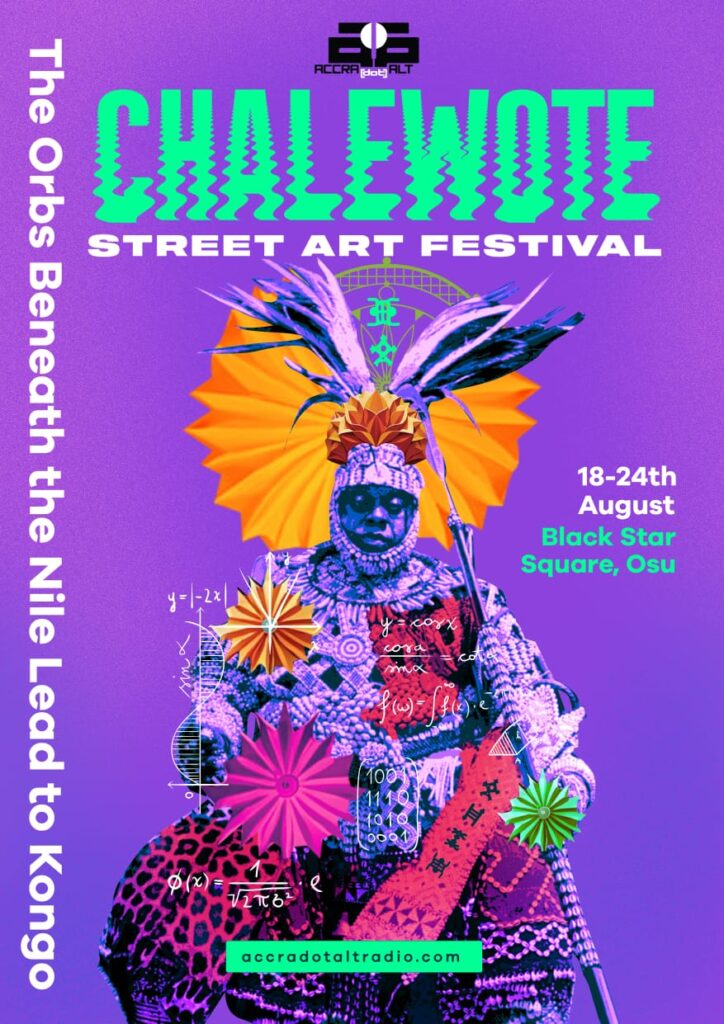
The fifteenth edition of the festival is themed, The Orbs Beneath the Nile Lead to Kongo. The theme calls for a deep reflection on Africa’s psychic, political, ecological, and spiritual archives. It asks: what buried powers and solidarities link the waters of the Nile to the forests and rivers of the Kongo? And how might they guide Africa’s cultural, spiritual, ecological, and political futures?

In the context of the festival, the Orbs could be read among other things as symbolic vessels of Africa’s buried and circulating powers that lie beneath the continent’s visible realities. They represent the ancestral wisdom, solidarity networks, and untapped creative energies that have survived colonial erasure, resource plunder, and cultural commodification.
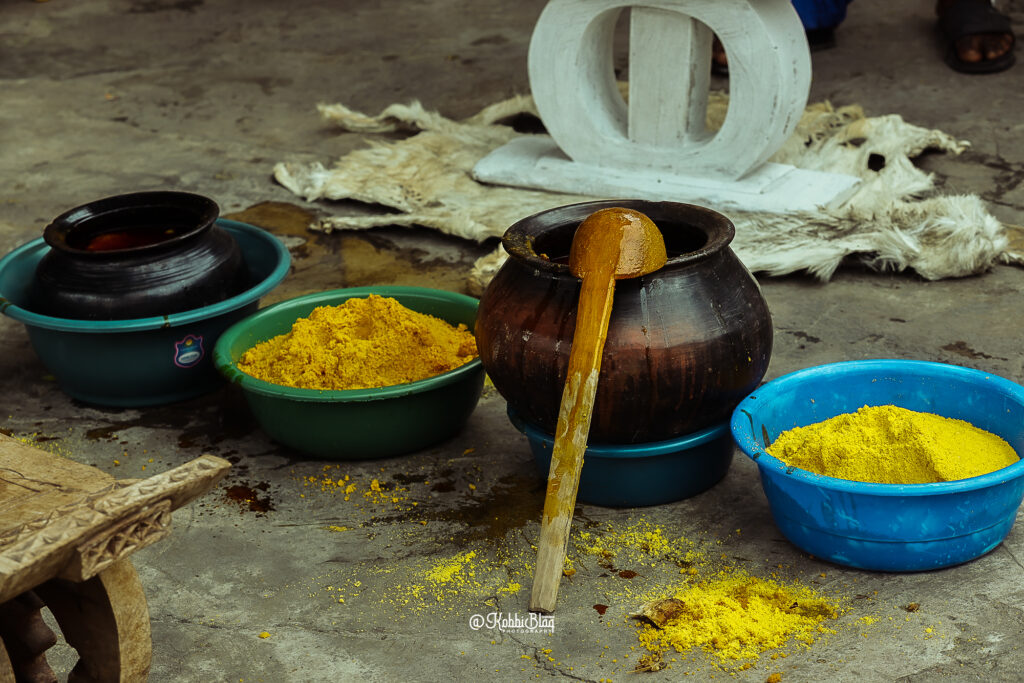
In an Africa experiencing its most significant geopolitical realignment since independence, the Orbs are a reminder that liberation is not only negotiated in boardrooms or battlefields, but also remembered, recharged, and rehearsed in the streets through art, ritual, processions, and collective imagination.

At its very core, Chale Wote Street Art Festival functions as both archive and prophecy rooted in Pan-African liberation thought, connected to historical struggles across the continent, and offering a sensory, participatory curriculum for re-imagining Africa’s place in the world.
From Nile to Kongo: Ancestral Geographies
The theme’s geography is not arbitrary. The Nile, cradle of ancient African civilizations, and the Kongo, epicenter of Central African cultural power and colonial resistance, are connected in African cosmologies as sites of origin, continuity, wealth, resistance, and spiritual energy. This year’s festival seeks to surface the “orbs” conceived as both wisdom-seeds and protective forces that lie beneath these waters.
To an extent, Patrice Lumumba’s prophetic final letter to his wife serves as an ideological anchor; “History will one day have its say… Africa will write its own history, and both north and south it will be a history full of glory and dignity.” This is not just a call for historiography, it is an invocation of African urgency and agency in shaping its destiny. This resonates with the festival’s use of art to write back history in public space.
The Kongo as Portal to Extractive Injustice
The Kongo’s symbolic resonance is inseparable from the material realities of the Democratic Republic of Congo (DRC). For centuries, the Congo River basin has been a site of immense wealth; ivory, rubber, uranium, copper, cobalt, coltan yet this wealth has rarely translated into the well-being of its people. From the brutality of King Leopold II’s Congo Free State, which claimed millions of Congolese lives, to present-day exploitation by multinational mining companies, the Congo’s riches have been systematically siphoned outward. Today, cobalt mined in the DRC powers smartphones and electric cars worldwide, yet Congolese mining communities often live in poverty, facing environmental devastation and unsafe labour conditions.

This “resource bypassing” is not unique to the Congo. Many African countries, Ghana included, whose economies are anchored in extractive industries share the paradox of being resource-rich yet economically and ecologically impoverished. In this way, the Kongo in this year’s theme serves as both a portal and a mirror, reflecting systemic global patterns of exploitation that link colonial legacies to present-day economic structures.
Chale Wote’s Pan-African Continuum
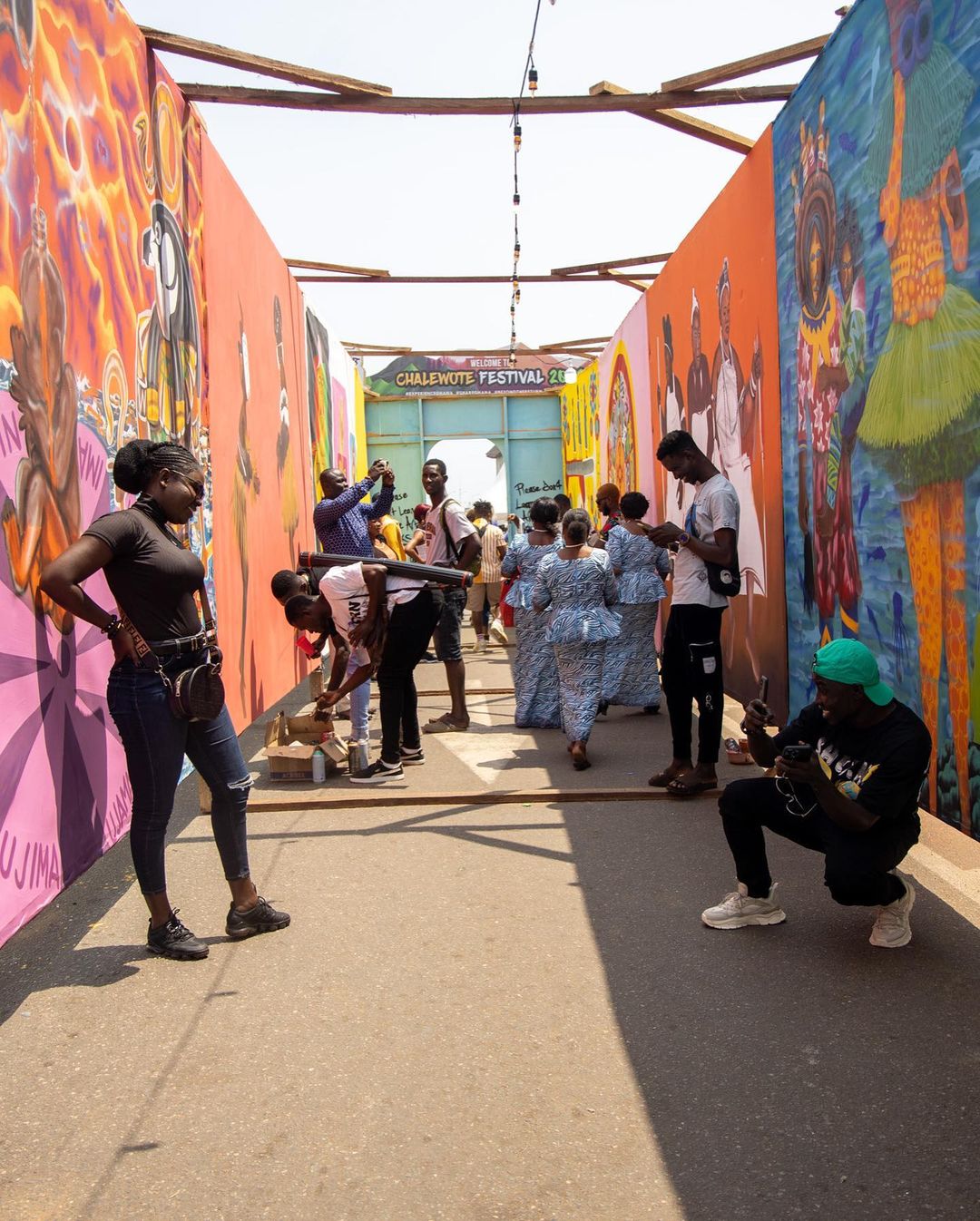
From its inception in 2011, Chale Wote Street Art Festival has cultivated a radical re-imagination of public space. In its murals, performances, installations, music, culinary delights, and processions, the festival mirrors earlier Pan-African cultural projects: FESTAC ’77 in Lagos, the Culture & Resistance Festival in Botswana (1982), and Dakar’s Biennale in its more politically charged years. Each event positioned art as a site of liberation. Chale Wote Street Art Festival extends this lineage into Accra’s streets.
Past editions have drawn on themes such as African Electronics (2016), exploring techno-futures rooted in African epistemologies, and Para-Other (2018), which challenged artists and festival goers to inhabit alternate realities and counter-narratives. This year’s Nile-Kongo arc builds on that history, but with a sharper focus on ancestral geographies and their relevance to today’s geopolitical realignments.
Geopolitical Context: A New Realignment
The 2020s have seen what can best be described as Africa’s most significant geopolitical shift since the wave of Independence in the 1950s–70s. Multipolarity, South-South cooperation, and renewed resource nationalism challenge the dominance of Euro-American imperialism. This macro-political context filters into cultural production. The rise of consciousness among Africa’s masses is visible not only on social media and protests, but in the aesthetics and politics of festivals like Chale Wote Street Art Festival.

By staging murals critiquing neocolonial extraction, screening films that interrogate marginalised narratives, and hosting panels on resource sovereignty, Chale Wote Street Art Festival 2025 inserts itself into these continental conversations. The Nile-Kongo metaphor becomes a map for linking Africa’s diverse liberation fronts; spiritual, economic, environmental, political, and epistemic. The festival transcends “art tourism” and turns festival goers into participants, and participants into co-authors of liberation narratives on the streets and beyond.
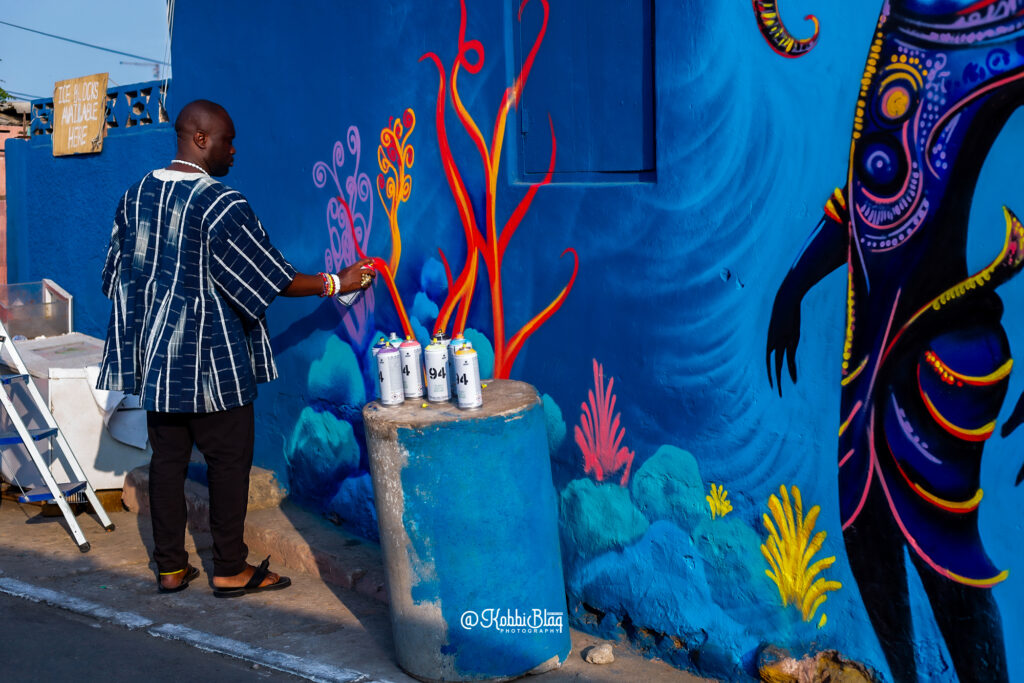
Street Art as a Living Archive
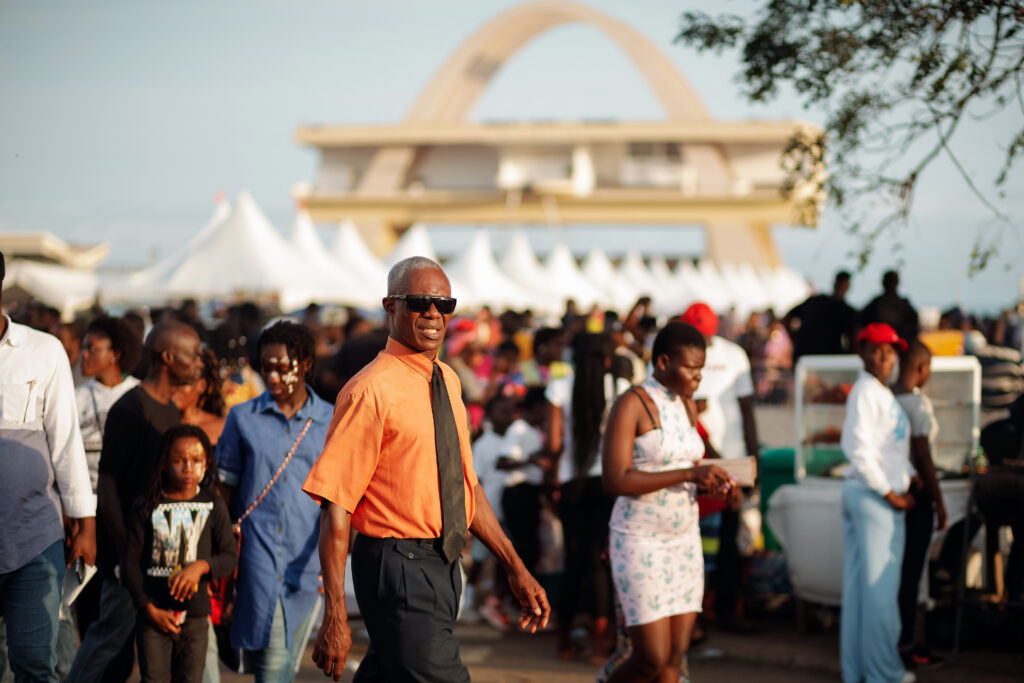
In Osu, Accra, marked by fishing communities, former seat of colonial and postcolonial power, monument to Ghana’s independence and icon of Pan-African aspiration, the festival transforms walls, alleyways, and open spaces into a “living archive of resistance.” Here, history is not confined to textbooks but performed, painted, sung, walked, eaten, and danced. The festival’s core mandate emphasise this democratisation of art: breaking it free from galleries and making it a shared public inheritance.

As cultural historian Amílcar Cabral reminds us, “The struggle is not only against exploitation but against the dehumanisation of a people.” Chale Wote Street Art Festival’s decolonial function lies precisely in its rehumanisation of space, history, people, and community; restoring public places as sites of dignity, creativity, transformation, and self-definition.
Liberatory Significance
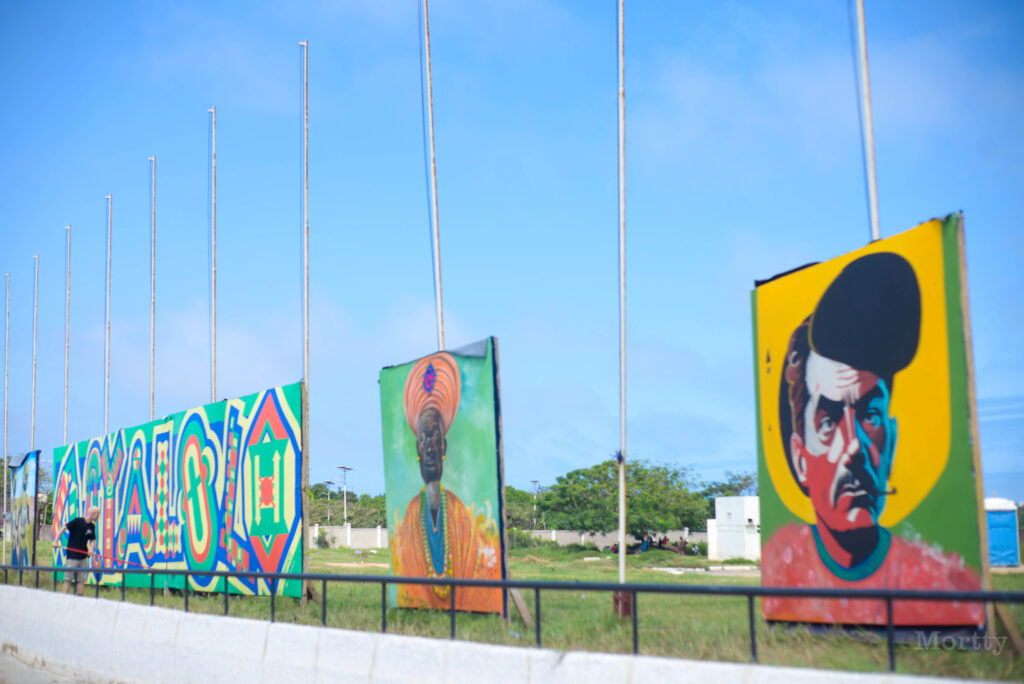
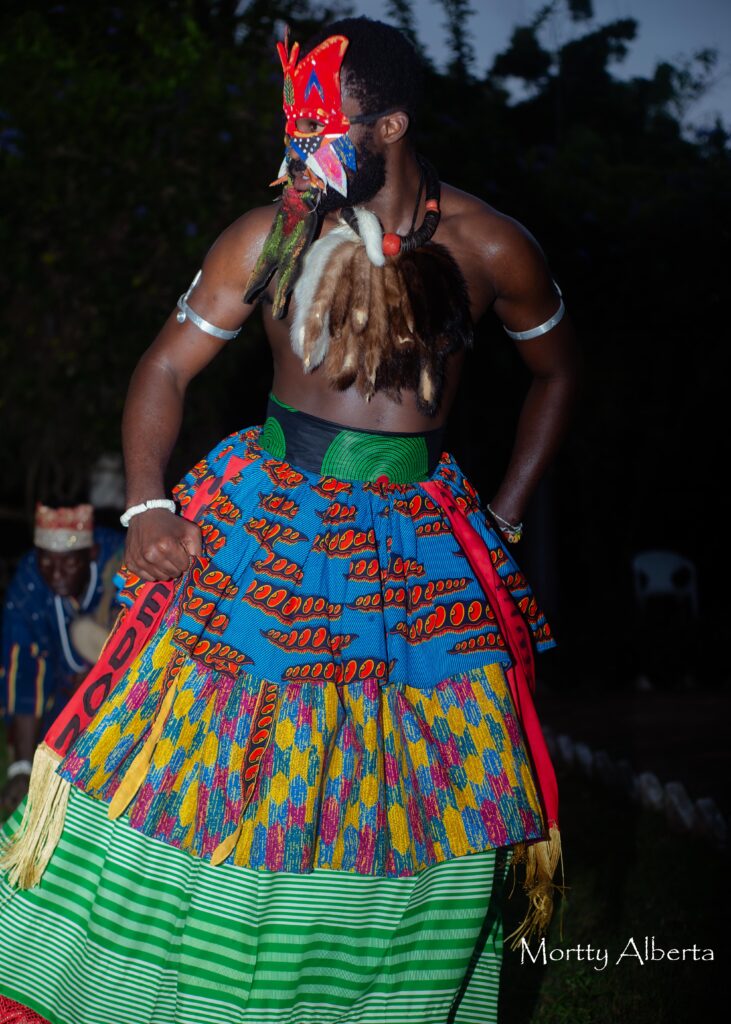
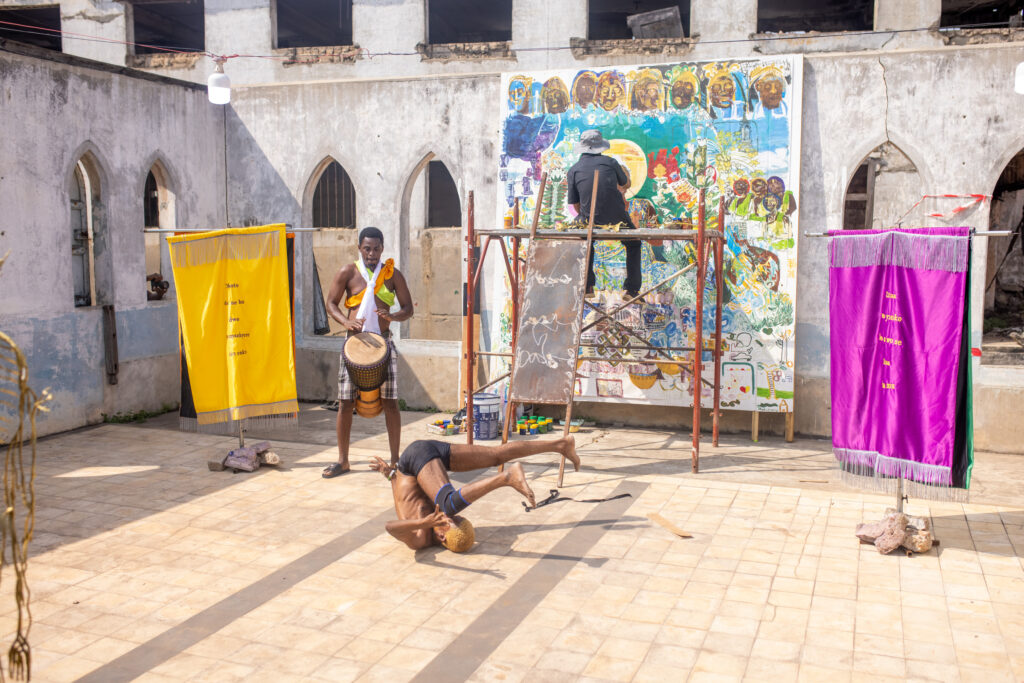
The fifteenth edition brings into conversation murals, film screenings, workshops, performances, food, processions, and multi-sensory installations. In this edition, the audiences are invited to “see” differently: To read murals not only as images but as nodes in a Pan-African discourse. To experience performance as ritual, reconnecting present bodies to ancestral currents. To walk the streets as acts of counter-mapping, reclaiming colonial cartographies through embodied presence. In this sense, Chale Wote Street Art Festival does not simply document liberation but it rehearses it.
Conclusion: The Orbs as Compass
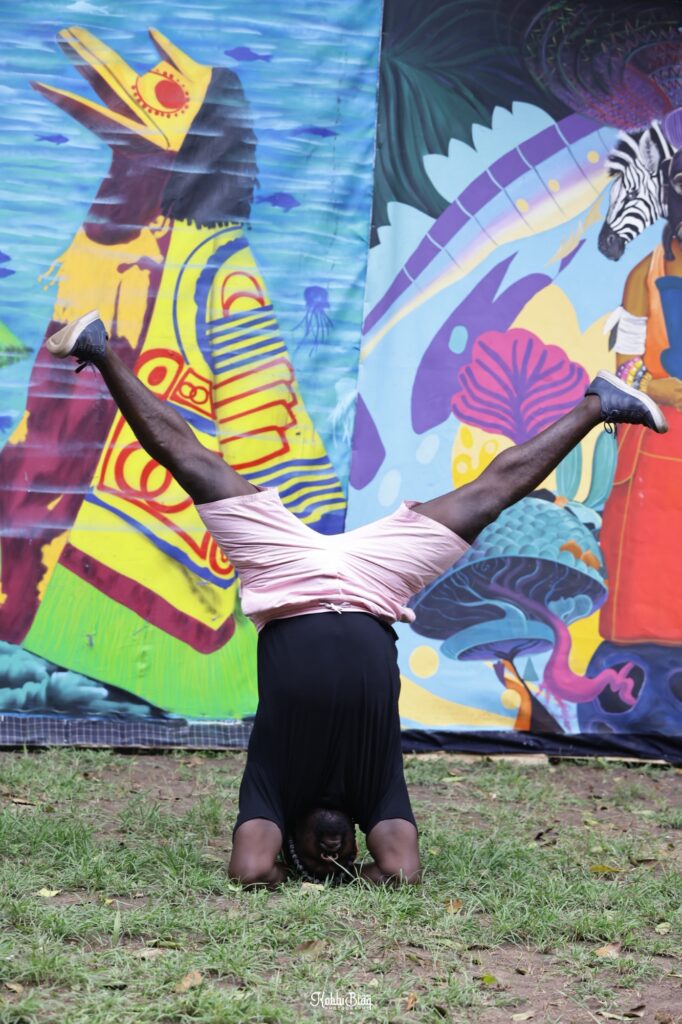
By invoking the Nile and Kongo, Chale Wote Street Art Festival 2025 asks us to trace lines of solidarity and power across the continent’s historical, material, political, ecological, and spiritual geographies. The festival’s multi-disciplinary, street-level praxis reclaims African space, memory, history, spirituality, psychology, and imagination from the margins. It continues the work envisioned by Nkrumah, Lumumba, Cabral, Diop, Fanon, and countless unnamed ancestors, matriarchs and freedom fighters. An Africa self-defined, united across borders, and alive in the present.
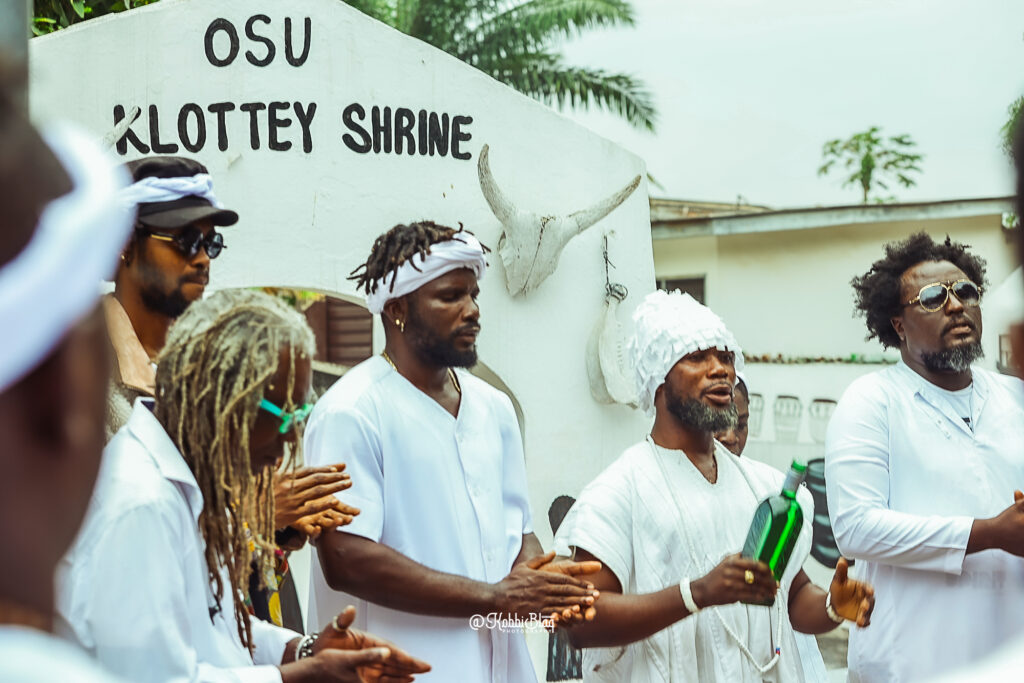
The week begins on Monday 18th with the Day of ReMembering procession, moving through the streets of Osu as a way of announcing the festival’s commencement and seeking blessings from ancestors who once walked these same streets. The procession concludes with the opening of the Shika Shika Art Fair, where selected Ghanaian and international artists present artworks that speak across geographies, histories, politics, and mediums.

The days that follow are given to film labs, workshops, and talk parties. The festival invites the public into intimate engagements with participating artists, learning about their processes and the visions that shape their work.
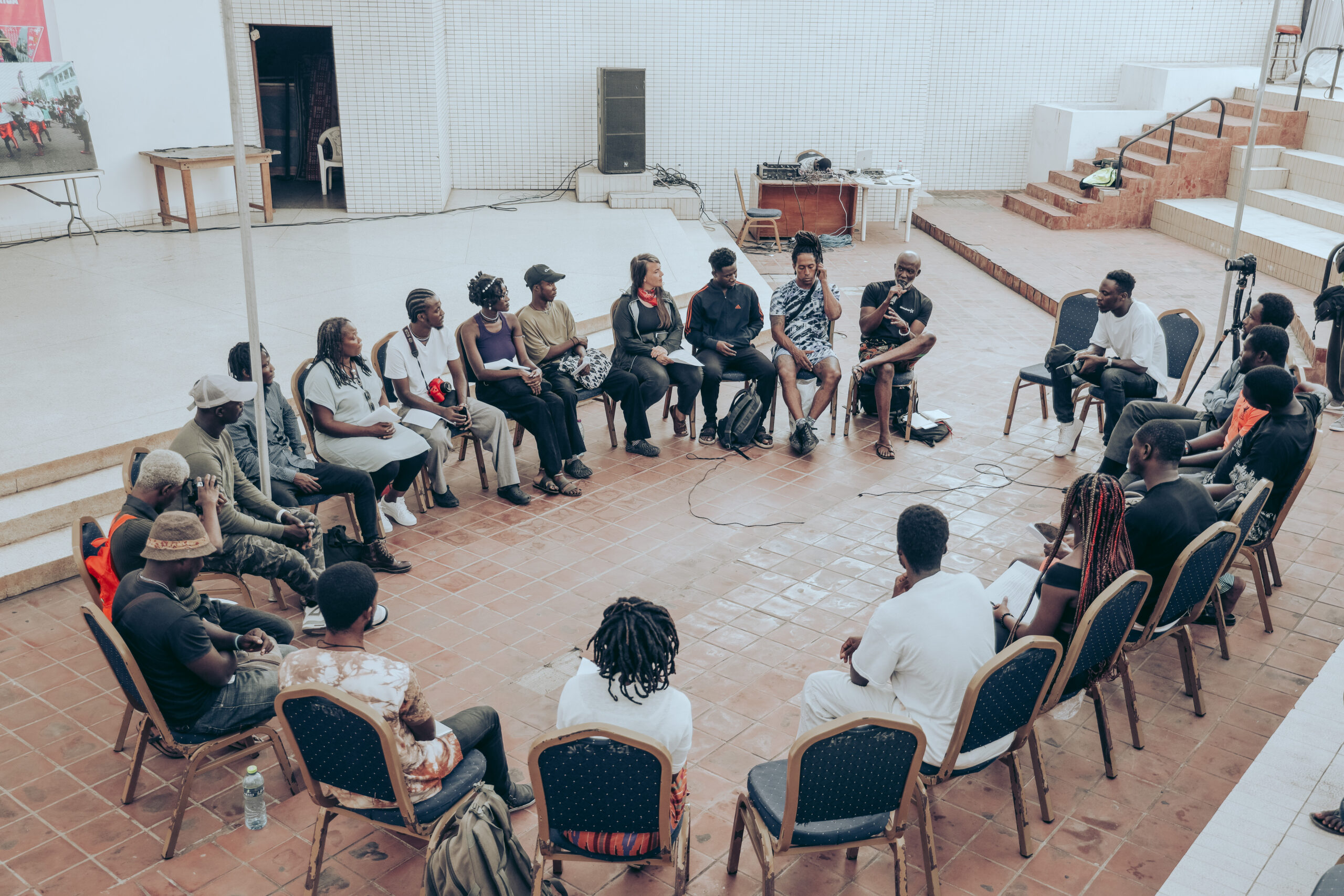
The weekend is the grand finale, where the city opens itself as a space for radical self-imagining. Here, festival-goers are invited to inhabit multiple realities, to express themselves without judgment, and to collectively partake in reconstructing a future where endless possibilities and parallel realities are not just imagined but rehearsed.

This is not mere spectacle; it is a political and spiritual exercise in freedom-making. In the words of Ghana’s own Kwame Nkrumah: “We face neither East nor West; we face forward.” At this year’s Chale Wote Street Art Festival, facing forward means looking deep beneath the rivers, pulling up the orbs, and letting them light the African continent and beyond.
