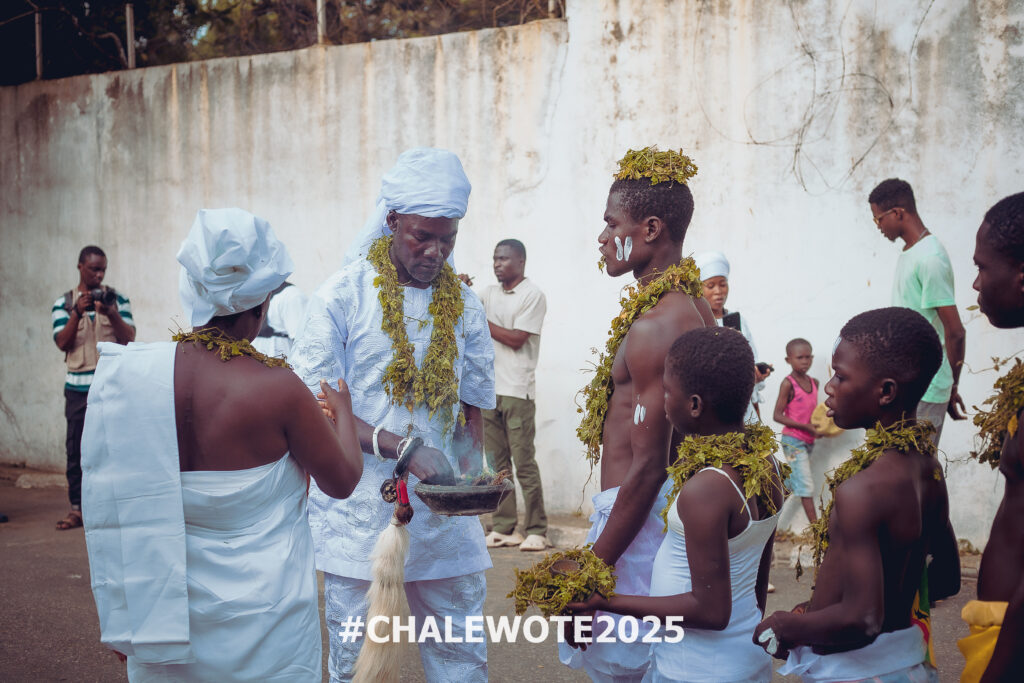
On a cloudy August afternoon in Accra, the Chalewote Street Art Festival 2025 began with solemnity. The festival is known for its opening all-white procession titled the Day of ReMembering. The procession set out from the historic Osu Klottey Temple where ritual prayers and libations were performed by Nuumo Noi Osikan III ( Osu Klotey Wulomo) and the participants to announce the festival’s commencement.
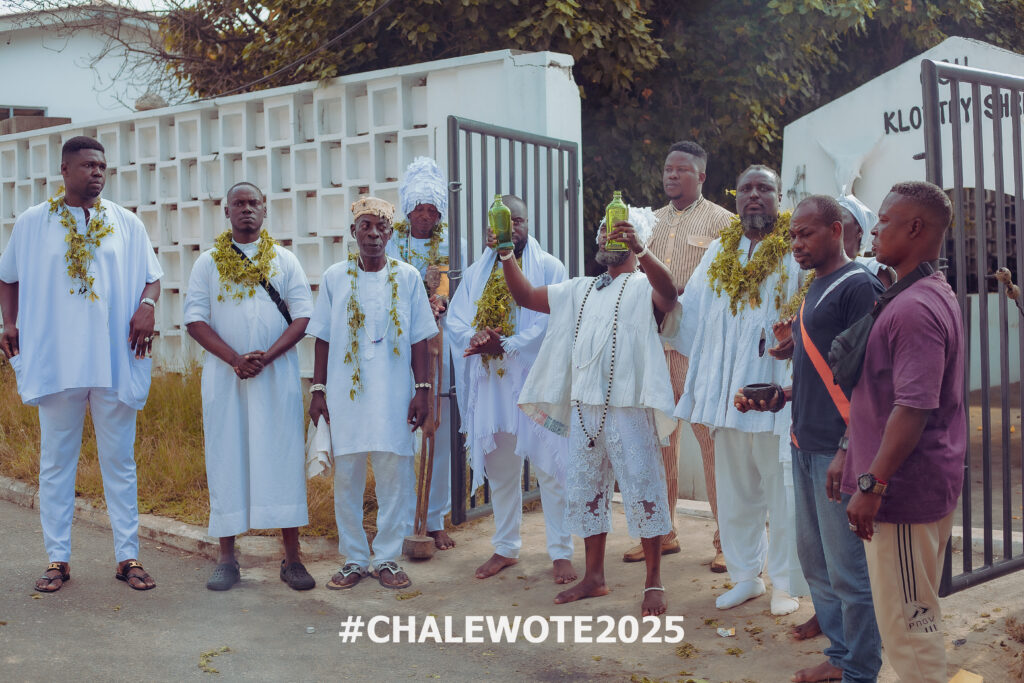
In the presence of the burning Nmatso, libations were poured as acts of appeasement, worship, and reverence. Oblations were made to the spirits and ancestors, summoning the powers of earth, sky, rivers, and trees to bless the ground upon which the festival would unfold.
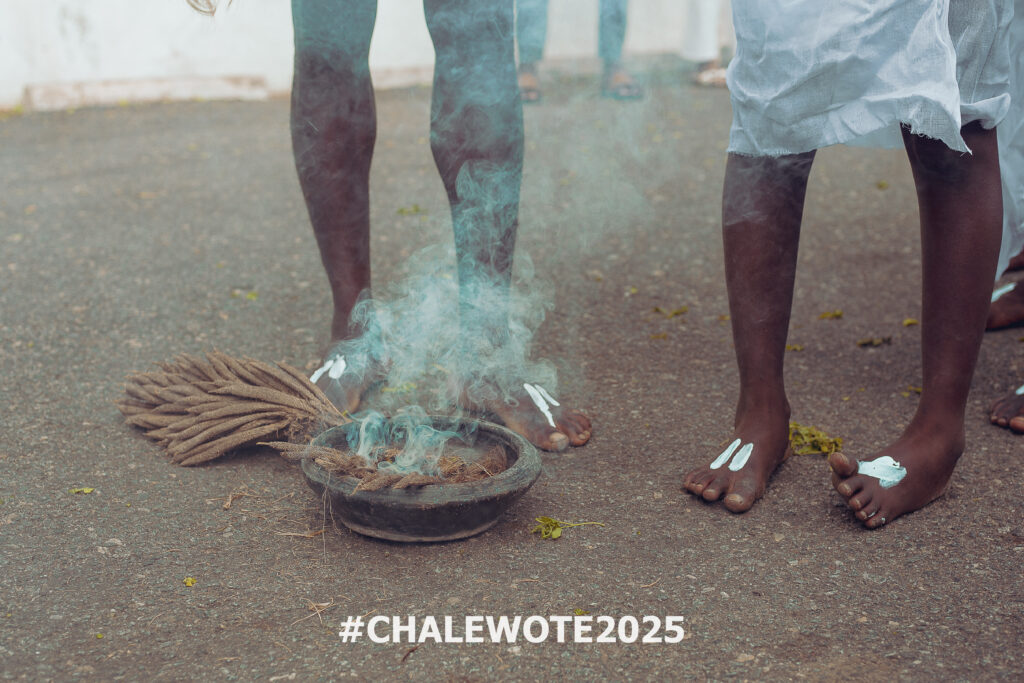
The burning of Nmatso, the male inflorescence of the palm tree holds deep ritual significance in Ga tradition, where it is used for purification and also as incense (perfume)for the Gods and Deities. Cleansing marks the beginning of the procession, ensuring that the path is cleared for what is to come.
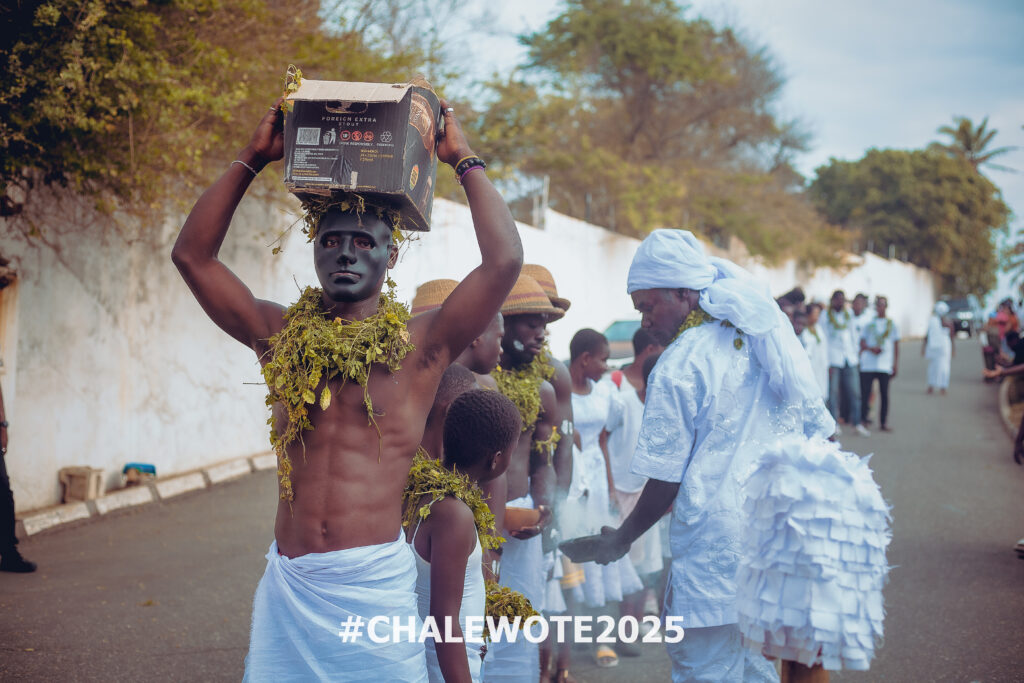
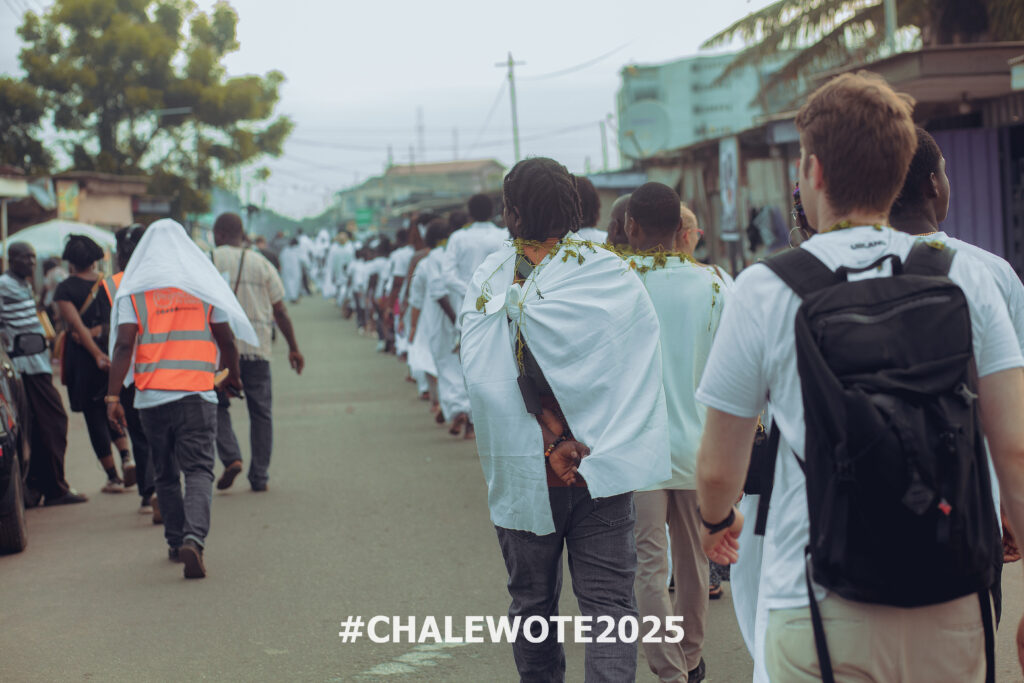
It was a quiet, deliberate procession, an embodied announcement that the festival had begun. Led by Samoah MacHanson, a spiritual custodian, without the usual fanfare that processions are known for, the act of walking itself carried meaning.
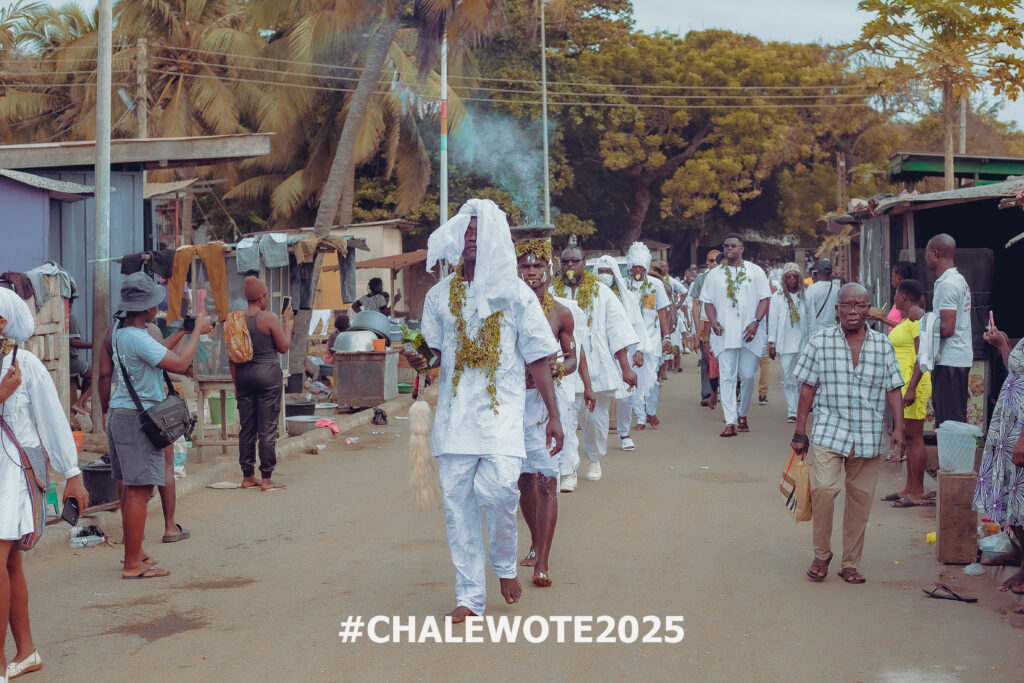
In this movement, knowledge was made: each step linked sacred tradition with the urban present, reminding participants and onlookers that walking is a way of knowing, remembering, grounding and not just transit.
And as the spirits of land, water, and sky were invoked, their echoes found resonance in the artworks that followed. Nii Noi Candos’s towering sixteen-foot installation, assembled from discarded materials, ocean debris, and fabric remnants, stood as both a warning and a blessing.
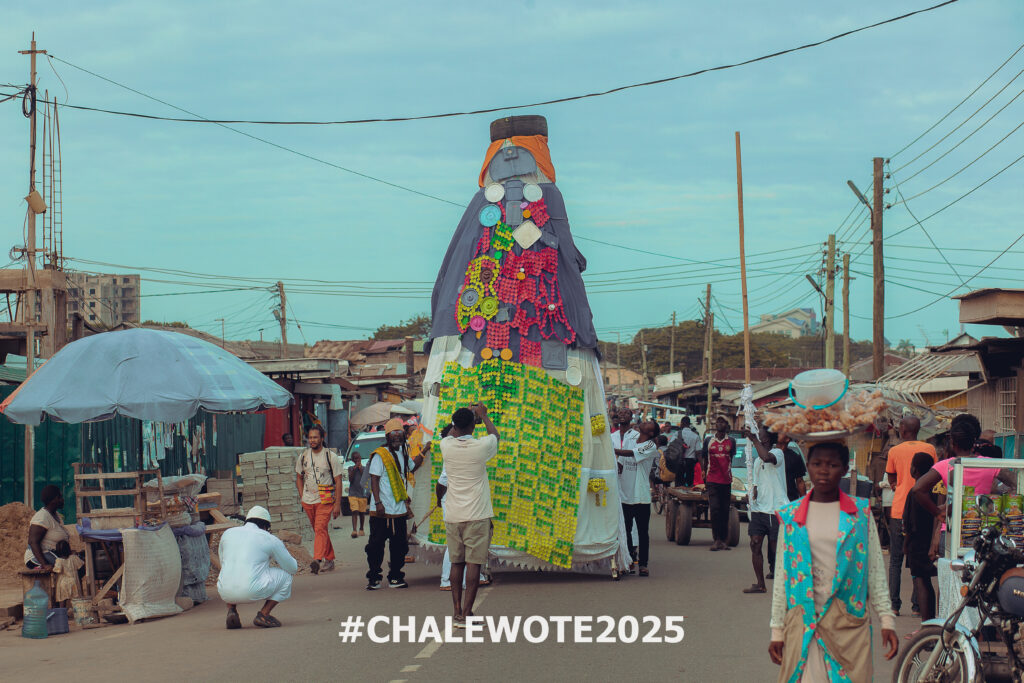
His work transformed waste into wonder, giving new life to what had been abandoned, much like the libations had called for renewal upon the earth. His moving installation carried with it the voices of the rivers and the ocean, reminding the community of the fragile yet enduring bond between humans and the natural world. This living monument of recycling and reinvention is just one of the numerous mind-blowing works that will animate this year’s festival, affirming Chale Wote as a space where ritual, ecology, and artistry are braided into a shared vision of survival and renewal.
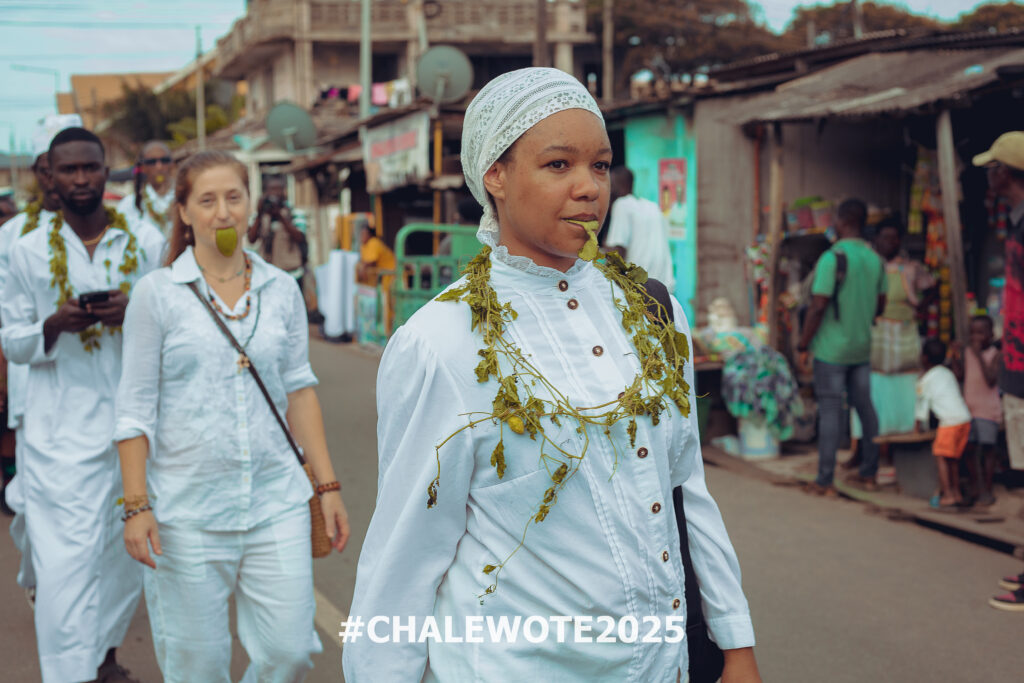
The procession went through some historical sites including the 28th February Crossroads, a site of Colonial Resistance. It was at this place that on 28 February 1948, a group of ex-servicemen (veterans of WWII who had fought for Britain) marched peacefully to the colonial Governor’s residence (Osu Castle) to present grievances over unpaid war benefits and poor treatment. At the crossroads, they were stopped by police.
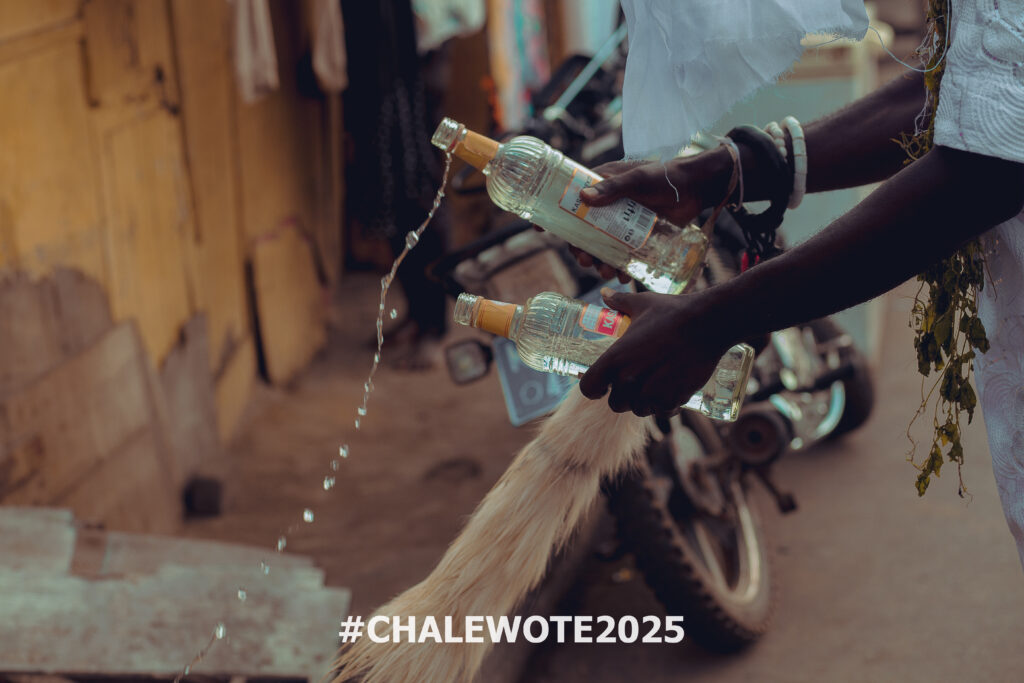
The colonial Superintendent, Imray, ordered them to disperse. When they refused, police opened fire, killing Sergeant Adjetey, Corporal Attipoe, and Private Odartey Lamptey. The killings triggered nationwide riots, strikes, and boycotts which became a catalyst for Ghana’s Independence.
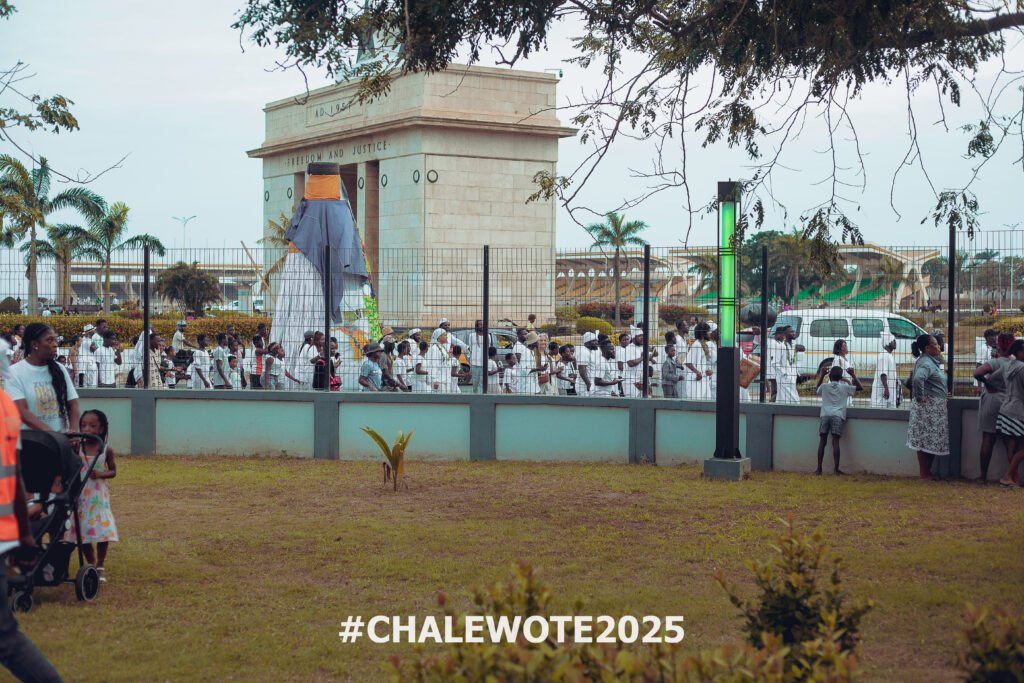
Also, the procession made a stop at the Independence Square, precisely, the Black Star Gate where it met Wulomo Nuumo Gbelenfo III who also offered libations and prayers.
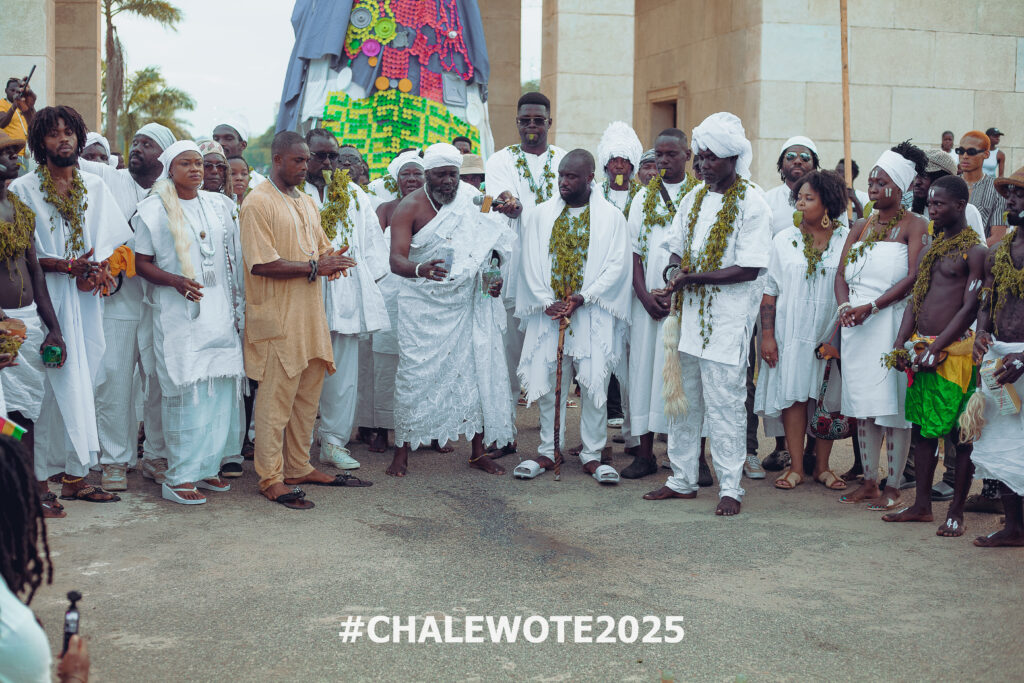
This historic space embodies Ghana’s liberation and leadership in African decolonization. The procession ended up at the Nationalism Park. Here, artworks had been installed across the grounds, transforming the space into an open gallery.
The highlight was the Shika Shika Art Fair, which gathered Ghanaian and international artists into a dialogue of images, objects, installation, and ideas. The Nationalism Park held curated booths, installations, and spaces for exchange, imagination, and encounter.
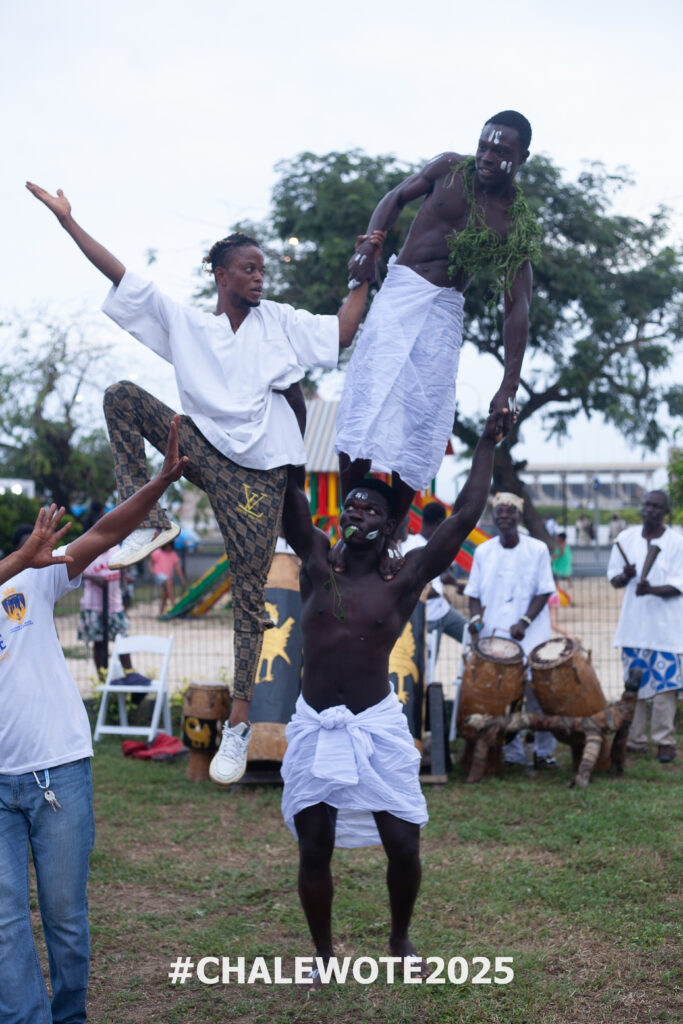
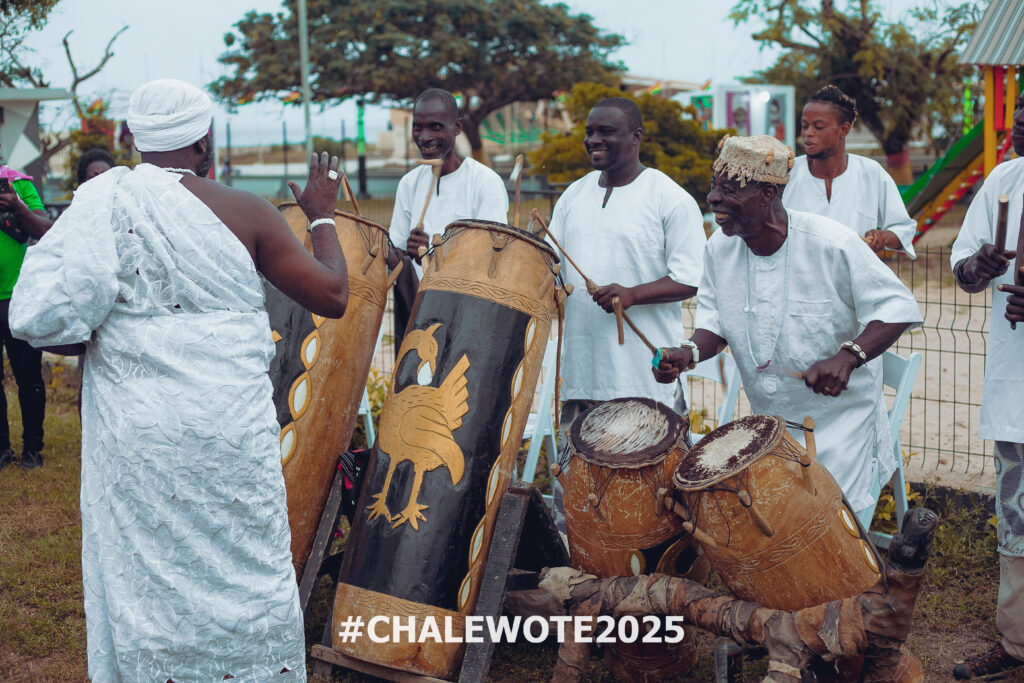
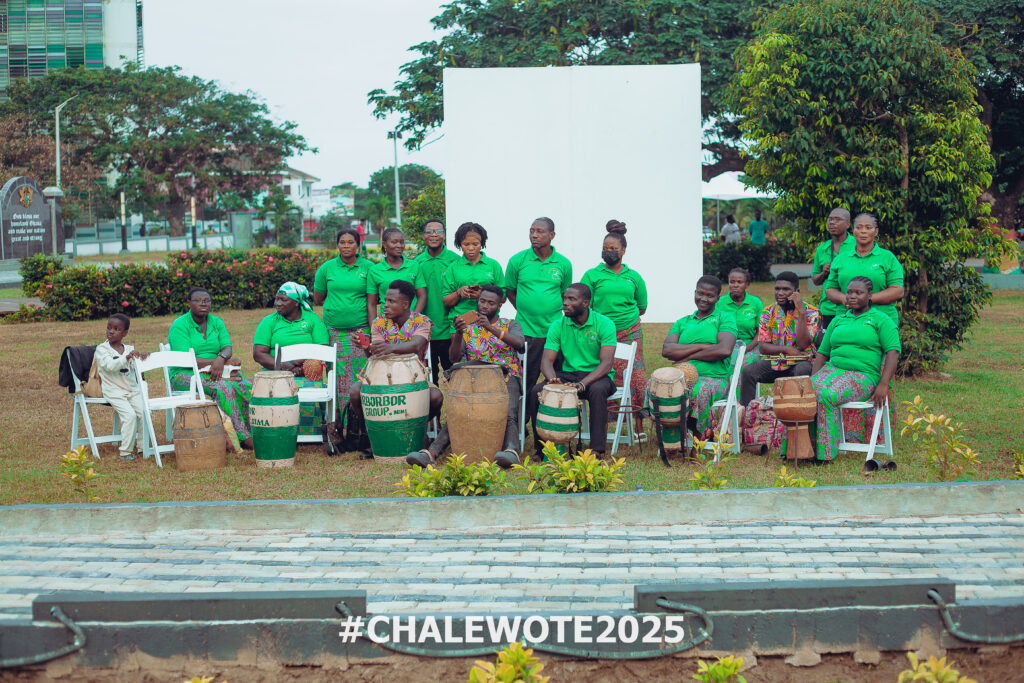
The evening also saw the performances of Nii Adjarh, Osu Obunufoatse and his ensemble and the evergreen Denyigba Borborbor group thrilled the night ravers with beautiful drumming, singing and dancing.
In Ga cosmology, the number three signifies certainty. For the people of Osu, the 15th edition of Chale Wote, now in its third staging within their community, carries this assurance. It is a sign that the festival has taken root, its presence no longer temporal but leaning toward permanence. This hope was mirrored in the faces of residents, who watched with quiet excitement and others with constrastingly loud jubilation and exclamations of acceptance as Monday’s procession moved through their streets in a silent, solemn march.
The first day of Chalewote 2025 unfolded as both ritual and statement. From temple to street, from community walk to international art showcase, the festival affirmed itself as a celebration, and a practice of connection between past and present, sacred and secular, Accra and the world.
Written by David Asante.